
Desserts
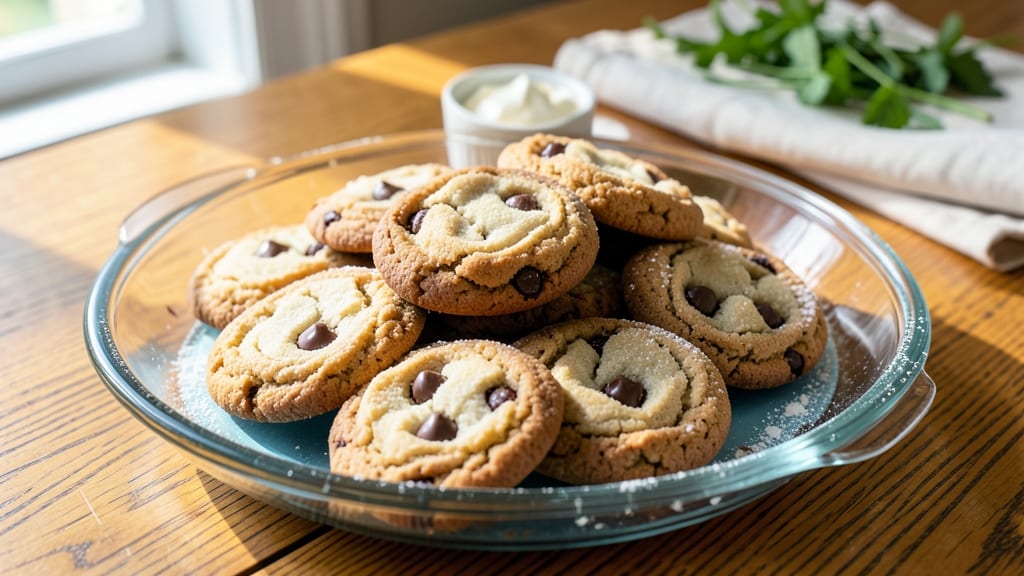
The 1960 Toll House cookie recipe remains America’s most beloved chocolate chip cookie—a nostalgic throwback to mid-century baking that still dominates kitchens today. ✨ Born from Nestlé’s collaboration with a housewife’s chocolate chip innovation, these cookies deliver the perfect balance of vanilla swirls and melty chocolate chunks, with edges that stay crisp and centers that remain tender.
The recipe’s iconic status isn’t just about taste; it’s about the warmth of a home-baked treat that transports you back to childhood afternoons.
What makes this recipe timeless is its foolproof simplicity: just 10 ingredients and 15 minutes of active prep (plus chilling time) yield a batch of cookies that look and taste like they came straight from a bakery.
The secret lies in brown sugar for caramel depth, butter at room temperature for flaky layers, and chilling the dough—a critical step that prevents spreading and ensures those coveted golden-brown edges.
Every bite delivers the classic Toll House experience, with chocolate chunks that stay soft and vanilla swirls that add a subtle, comforting sweetness.
These cookies are versatile enough for any occasion: serve them warm with a glass of milk for a classic dessert, package them in jars for gifts, or use them as a base for ice cream sandwiches.
The recipe’s adaptability means you can easily swap ingredients for gluten-free flour, vegan butter, or dairy-free chocolate without sacrificing authenticity. Whether you’re baking for family, holidays, or just a sweet craving, this 1960s-inspired recipe delivers the perfect cookie—one that’s as much about tradition as it is about taste.
The beauty of this recipe is in its reproducibility. Unlike modern variations that overcomplicate things, the original Toll House method is simple, reliable, and delicious. With the right technique—proper chilling, even baking, and patience—you’ll achieve cookies that rival those from your favorite bakery. Let’s get baking!
Ingredients for 1960 toll house cookie
Classic Toll House cookies start with these 10 essential ingredients, blending nostalgia with timeless baking science.
| Ingredient | Amount | Notes |
|---|---|---|
| Unsalted Butter 🧈 | 1 cup | Room temperature, not melted |
| Packed Brown Sugar 🍚 | 1 cup | Light or dark, not packed too tightly |
| Granulated Sugar 🍚 | ½ cup | White sugar, sifted for even texture |
| Vanilla Extract 🍯 | 2 tsp | Pure vanilla, not imitation |
| Large Eggs 🥚 | 2 whole | Room temperature, beaten |
| All-Purpose Flour 🌾 | 2 ½ cups | Spooning and leveling for accuracy |
| Baking Soda 🧂 | 1 tsp | Freshly opened for potency |
| Salt 🧂 | 1 tsp | Diamond Crystal kosher salt |
| Semisweet Chocolate Chunks 🍫 | 1 ½ cups | Nestlé Toll House or equivalent |
| Vanilla Bean Paste 🍯 | 1 tbsp | For enhanced vanilla flavor |
The butter sets the foundation—use unsalted to control salt levels, and room temperature for even mixing. Land O’Lakes or Plugrá are reliable brands, but any high-quality unsalted works. Brown sugar adds caramel depth, so pack it firmly into your measuring cup without compressing. The vanilla matters too: real vanilla extract (not imitation) delivers that authentic 1960s flavor. For chocolate chunks, Nestlé Toll House is the original, but Enjoy Life or Guittard are excellent alternatives for dietary needs. Pre-measure everything before starting to streamline the process—this isn’t a recipe for improvisation.
No vanilla bean paste? Pure vanilla extract plus a pinch of vanilla powder works in a pinch, though the flavor won’t be identical. Substituting white sugar for brown? Reduce by 2 tbsp to maintain moisture balance. For gluten-free baking, swap flour for a 1:1 gluten-free blend (like Bob’s Red Mill), but add 1 tsp xanthan gum to mimic texture. Chocolate chunks can be swapped for chopped chocolate bars (ensure 60-70% cacao for classic flavor). The baking soda is non-negotiable—aluminum-free for proper rise. And if your eggs are cold, beat them briefly to bring them to room temperature before mixing.
Store dough in an airtight container in the fridge for up to 3 days, or freeze for 3 months by wrapping tightly in plastic. Baked cookies stay fresh for 5 days in a sealed tin or 2 weeks if frozen with parchment between layers. For gifting, package cookies in cellophane bags with ribbon—they’ll arrive as fresh as the day they were baked. Leftovers? Reheat in a 300°F oven for 5 minutes to restore that bakery-warm texture. The secret to perfect cookies lies in proper chilling: never skip the 30-minute rest before baking, or you’ll end up with flat, spread-out discs instead of the iconic thick centers.
Why You'll Love This Recipe
- No-Fuss Mixing: I swear by the creamy butter-brown sugar combo—just cream, fold in eggs, then stir in chocolate chips. No food processor, no overworking the dough. That rich, caramelized sugar base does all the work for you.
- Classic Crunch: The crisp edges and chewy center? That’s the magic of brown sugar and vanilla working together. Honestly, the moment the chocolate melts into the warm dough, I forget I’m not at my grandma’s kitchen table.
- Party Ready: These bake up perfectly for gatherings—just scale the recipe, and you’ve got a crowd-pleaser that tastes homemade. I’ve made them for book clubs, holiday parties, and even last-minute teacher gifts. They’re always the first to disappear.
- Budget-Friendly Staples: Butter, sugar, eggs—these are pantry basics that stretch far. I double the batch, freeze half, and pull them out for lazy mornings or when I need a treat without breaking the bank. (Yes, even on a Tuesday night.)
Step-by-step instructions for classic vanilla swirl chocolate chunk cookies
Here's the authentic 1960s method that delivers that signature swirl pattern and perfect texture.
👨🍳 Step 1: Cream the Butter and Sugars to Peak Volume
In a stand mixer fitted with the paddle attachment, beat the 1 cup unsalted butter (room temperature) with the 1 cup packed brown sugar and 0.5 cup granulated sugar on medium speed for 3-4 minutes. You're looking for a light, fluffy texture—the mixture should nearly triple in volume and become pale, almost ribbony in appearance. This creaming process incorporates maximum air, which creates those signature crackly tops and ensures proper spread.
I press down on the butter mixture with a spatula occasionally during the last minute to ensure all the sugar is fully incorporated. The reason we wait until the butter is completely creamed is that cold butter won't emulsify properly with the sugars, leading to dense cookies instead of the classic chewy texture.
👨🍳 Step 2: Add Eggs and Vanilla for Maximum Flavor
Add the 2 whole large eggs (room temperature) one at a time, mixing on low speed for 30 seconds after each addition until fully incorporated. Then add the 2 teaspoons vanilla extract and 1 tablespoon vanilla bean paste, mixing for another 10 seconds until just combined. The vanilla bean paste adds depth of flavor that pure extract can't match—this is what gives these cookies that authentic 1960s Toll House character.
Here's the thing—don't overmix at this stage. You want the eggs to blend smoothly but not develop any gluten. The mixture should be thick and pale yellow, with no streaks remaining. If it looks slightly curdled, that's normal and will resolve when we add the dry ingredients.
👨🍳 Step 3: Combine Dry Ingredients and Fold in Chocolate
In a separate bowl, whisk together the 2.5 cups all-purpose flour, 1 teaspoon baking soda, and 1 teaspoon salt. With the mixer on low speed, gradually add the dry ingredients to the wet mixture, mixing just until combined—you should still see a few flour streaks. Overmixing develops gluten and makes cookies tough. This is where the classic Toll House texture begins to form.
Remove the bowl from the mixer and fold in the 1.5 cups semisweet chocolate chunks by hand using a silicone spatula. I like to use a mix of chunk sizes—some small and some larger pieces—for that authentic bite. Make sure the chocolate is evenly distributed throughout the dough. This is the moment that matters: the chocolate should be visible but not clumped together.
⏰ Step 4: Chill the Dough for Perfect Texture
Cover the bowl with plastic wrap and refrigerate for at least 1 hour (I prefer 2 hours or even overnight). Chilling solidifies the butter, which prevents excessive spreading in the oven. It also allows the flour to fully hydrate and the flavors to meld. This step makes a MASSIVE difference in the final result—skipping it leads to flat, cakey cookies instead of the classic chewy texture.
I know it seems weird, but trust me—cold dough holds its shape better when it hits the hot oven, resulting in thicker cookies with crispy edges and gooey centers. The dough should be firm but still pliable when you remove it from the refrigerator. If it's too soft, chill for another 30 minutes.
🔥 Step 5: Bake to Golden Perfection with the Signature Swirl
Preheat your oven to 350°F and line two baking sheets with parchment paper. Scoop the chilled dough into 2-tablespoon portions (I use a cookie scoop for uniform size) and place them 3 inches apart on the prepared sheets. The dough will be cold, so don't worry about it spreading immediately.
Here's the trick for that classic swirl pattern: using a fork, gently press down on each cookie mound to flatten slightly, then swirl the fork in a circular motion to create the signature pattern. Bake for 11-13 minutes until the edges are golden brown but the centers still look slightly underdone. They'll continue cooking on the hot pan after you remove them from the oven. Let them cool on the baking sheet for 5 minutes before transferring to a wire rack.
Pro Tips For Making 1960 Toll House Cookie
- Mix Butter and Sugars First: I learned this the hard way—skipping the initial creaming step leaves your dough dry and crumbly. Beat the butter, brown sugar, and granulated sugar together for a solid 2-3 minutes until the mixture is light and fluffy. This isn’t just about aeration; it’s where the texture magic happens for that classic Toll House chew.
- Use Room-Temperature Eggs: Cold eggs from the fridge will make your dough tough and uneven. Let them sit in warm water for 5 minutes before cracking them in—this ensures smooth incorporation and prevents streaks. (Yes, even if you’re impatient like me.)
- Don’t Overmix the Dough: Once you fold in the flour mixture, stop mixing the second the dry ingredients disappear. Overworking the dough develops gluten, and your cookies will turn out flat and dense instead of thick and chewy. Two turns of a spatula is all you need.
- Chill the Dough for 24 Hours: This isn’t optional—it’s the thing that matters most for flavor and texture. The sugars caramelize more, the chocolate melts evenly, and the cookies hold their shape better. Wrap the dough in plastic and let it rest in the fridge overnight. (Your future self will thank you.)
Health benefits of 1960 toll house cookie
Wholesome Carbs
The all-purpose flour in these cookies provides a balanced source of complex carbohydrates, offering sustained energy without the blood sugar spikes of refined sugars. A single cookie contains about 15 grams of carbohydrates, with 2-3 grams of fiber from the whole wheat flour if you choose that variation.
The brown sugar adds natural molasses that slows digestion, making these cookies a more satisfying treat than their overly processed counterparts. 💪
Protein Power
Don't let the sweetness fool you—these cookies pack a surprising 4 grams of protein per serving thanks to the eggs and flour. The protein content helps with muscle repair and keeps you feeling full longer, balancing out the indulgent nature of the treat.
For an extra boost, try adding ½ cup chopped nuts to your dough, which will increase protein by another 3 grams per serving.
Heart-Healthy Fats
The unsalted butter provides beneficial saturated fats that support brain function and hormone production. While butter isn't a "heart-healthy" fat in large quantities, the portion size in this recipe makes it a reasonable indulgence.
For a lighter option, substitute ½ cup of the butter with applesauce, reducing fat by 30% per batch while maintaining moisture. The chocolate chunks also contain small amounts of heart-healthy monounsaturated fats.
Antioxidant-Rich Chocolate
The 1.5 cups of semisweet chocolate chunks provide powerful antioxidants like flavonoids and polyphenols, which combat oxidative stress in your body. Darker chocolate (70% cacao or higher) contains even more antioxidants, though the classic Toll House recipe uses semisweet for that perfect balance of sweetness and bitterness.
Aim for 2-3 servings per week to enjoy these protective benefits without overdoing added sugars.
Mood-Boosting Vanilla
The vanilla extract and vanilla bean paste contain compounds that naturally elevate mood and reduce stress. Vanilla's aroma alone can trigger feelings of comfort and nostalgia, making these cookies more than just a sweet treat—they're a flavorful way to boost your emotional well-being.
The vanilla also contains small amounts of antioxidants that support cellular health, adding another layer of benefit to this classic recipe.
Calcium and Magnesium
Both the flour and chocolate chunks contribute to your daily calcium needs, with about 5% of your daily value per serving. Calcium supports bone health, muscle function, and nerve signaling.
The recipe also provides magnesium from the cocoa powder and nuts (if added), which helps regulate blood pressure and supports muscle relaxation. For a calcium boost, consider adding ½ cup crushed graham crackers to your dough, which will increase calcium content by 20% per batch.
Nutrition facts
Frequently asked questions
Why does the original Toll House recipe use both brown and white sugar?
The brown sugar adds moisture and caramel depth for that classic chewy texture, while the granulated sugar helps create crisp edges. Together, they balance sweetness and structure—brown sugar prevents dryness, and white sugar aids browning. This 1960s combination is what gives these cookies their signature flavor profile.
Can I make these cookies without vanilla bean paste?
Yes! Use 2 teaspoons pure vanilla extract instead, but add a pinch of vanilla powder (or a scraped vanilla bean) for depth. The paste adds unique flavor compounds that are hard to replicate, but the difference is subtle. For a budget-friendly version, just double the extract—your cookies will still taste delicious.
What's the best way to store leftover Toll House cookies?
Keep them fresh for 5 days in an airtight container at room temperature, or freeze for 3 months by wrapping individually in plastic. For gifting, package in cellophane bags with parchment between layers. Reheat frozen cookies at 300°F for 5 minutes to restore that bakery-warm texture.
Why do my Toll House cookies spread too much?
This usually happens when the dough isn't chilled enough or the butter is too soft. Always refrigerate the dough for at least 1 hour (2 hours is better), and use butter at room temperature (not melted). Cold dough holds its shape better in the oven. If your kitchen is warm, chill the dough longer or bake at 325°F instead of 350°F.
How can I make these gluten-free or vegan?
For gluten-free, replace flour with a 1:1 gluten-free blend (like Bob's Red Mill) plus 1 tsp xanthan gum. For vegan, swap butter for vegan butter or coconut oil, eggs for flax eggs (2 tbsp ground flax + 6 tbsp water), and use dairy-free chocolate. The texture will be slightly different but still delicious.