
Desserts
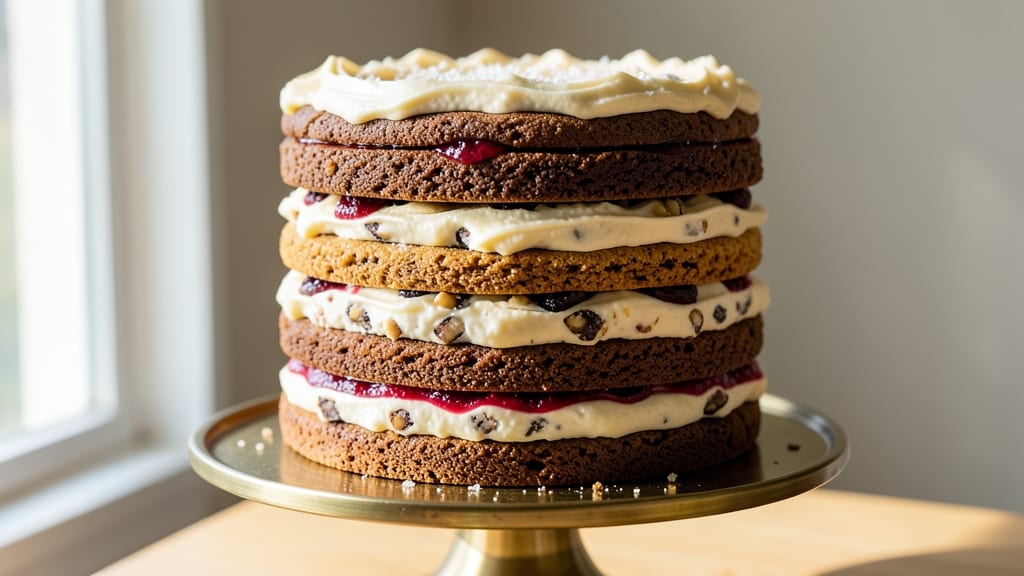
This 7-layer cookie cake recipe delivers a showstopping dessert with pillowy vanilla swirls, crunchy oat topping, and layers of creamy frosting that taste even better the next day. 💛 The secret lies in baking each component separately—cookie base, chocolate and vanilla fillings, and oat crumble—then assembling them into a tower of texture and flavor that’s impossible to resist.
What makes this recipe special is the balance of textures: soft cookie layers hold together while the crispy oat topping adds contrast, and the rich chocolate and vanilla fillings create a decadent surprise with every bite.
The process requires patience—cooling each layer completely before assembly—but the result is worth every minute of wait time.
By the time you’re done, you’ll have a restaurant-worthy dessert that’s perfect for celebrations or satisfying cravings. The cake stays moist for days, and the frosting adds a glossy finish that makes it look as good as it tastes.
Whether you’re feeding a crowd or treating yourself, this recipe delivers foolproof layers of homemade magic.
Optional variations let you customize the flavors—swap chocolate for caramel, add sprinkles, or top with fresh berries. Let’s get baking!
Ingredients for 7 layer cookie cake
Gather these essential ingredients for a restaurant-quality cookie cake with perfect layers.
| Ingredient | Amount | Notes |
|---|---|---|
| All-Purpose Flour 🌾 | 4 cups | Sifted for light texture |
| Unsalted Butter 🧈 | 2 cups | Cold, cubed for cookie layers |
| Granulated Sugar 🍚 | 2 ½ cups | Superfine preferred for smoothness |
| Brown Sugar Packed 🍚 | 1 ½ cups | Lightly packed for moisture |
| Large Eggs 🥚 | 4 whole | Room temperature for even mixing |
| Pure Vanilla Extract 🌿 | 2 tbsp | High-quality for authentic flavor |
| Baking Powder 🧂 | 2 tsp | Freshly opened for lift |
| Salt 🧂 | 1 ½ tsp | Fine sea salt preferred |
| Semisweet Chocolate Chips 🍫 | 1 ½ cups | High-quality for rich filling |
| Powdered Sugar 🍚 | 3 cups | For smooth frosting |
| Heavy Whipping Cream 🥛 | 2 cups | Cold for stiff peaks |
| Old-Fashioned Rolled Oats 🌾 | 2 cups | Toasted for enhanced crunch |
| Light Corn Syrup 🍯 | ½ cup | For oat topping binding |
| Ground Cinnamon 🌿 | 1 tbsp | For warm oat topping flavor |
| Mini Chocolate Chips 🍫 | 1 cup | Optional for extra decadence |
The butter and sugars are non-negotiable here—cold cubed butter creates flaky cookie layers, while superfine sugar ensures a silky texture. Trader Joe's has great options for both, but any high-quality brand works. For the chocolate filling, Ghirardelli chips melt beautifully, but Enjoy Life brand is perfect if you need gluten-free. Don't skip the vanilla extract—Nielsen-Massey is my go-to, but any pure extract will do. The oats should be old-fashioned rolled for that perfect crunch, and Bob's Red Mill is my favorite for texture.
No superfine sugar? Pulse regular granulated sugar in a food processor for 30 seconds—it works in a pinch. Running short on vanilla? Vanilla bean paste gives you specks and extra flavor. The chocolate chips can be swapped for white chocolate or caramel bits if you prefer. For the frosting, if you can't find powdered sugar, blend granulated sugar with 1 tbsp cornstarch to mimic it. The oat topping can be made ahead and toasted fresh before assembly—just store it in an airtight container until ready to use.
Keep the cookie layers wrapped in plastic for 3 days at room temperature, or freeze for up to 3 months. The frosting stays fresh for 5 days in the fridge, but add a splash of milk when rewhipping. The oat topping can be prepped a week ahead—it just needs a quick toast before going on the cake. For make-ahead convenience, assemble the cake layers without frosting, then refrigerate. Add the frosting just before serving to keep it light and fluffy.
Why You'll Love This Recipe
- No Baking Skills Needed: I swear, this cake is basically a grown-up’s graham cracker sandwich—just with way more butter and sugar. You’ll mix dough, roll it out, and stack layers like a lazy lasagna. No piping bags, no fancy decorating, just pure, unapologetic cookie layers.
- Butter-Sugar Overload: That rich combo of brown and granulated sugar plus melted butter in every layer? It’s like dessert hugs your taste buds. The eggs bind it all together while keeping it tender, so you get that perfect chewy-crisp balance without a single bite feeling dry.
- Party in a Pan: Between us, this is my secret weapon for birthdays, potlucks, or when I just want to impress someone with minimal effort. You can even prep the dough ahead and assemble it later—no one will guess you didn’t spend hours in the kitchen.
Step-by-step instructions for 7 layer cookie cake
Here's how to build this showstopper—layer by layer—with perfect texture every time.
👨🍳 Step 1: Prepare the Vanilla Cookie Base Layers
Preheat your oven to 350°F and line three 9-inch round cake pans with parchment paper. In a stand mixer fitted with the paddle attachment, cream together the 2 cups unsalted butter, 2.5 cups granulated sugar, and 1.5 cups brown sugar packed on medium speed for 3-4 minutes until light and fluffy. You'll see the mixture nearly double in volume and turn pale.
Add the 4 whole large eggs one at a time, mixing just until each is incorporated. Scrape down the sides of the bowl, then mix in the 2 tbsp pure vanilla extract. In a separate bowl, whisk together the 4 cups all-purpose flour, 2 tsp baking powder, and 1.5 tsp salt. Gradually add the dry ingredients to the wet, mixing on low speed just until combined—don't overmix. Fold in the 1.5 cups semisweet chocolate chips by hand.
🍳 Step 2: Bake and Assemble the Cookie Layers
Divide the dough evenly among the three prepared pans, spreading each layer to the edges. Bake for 10-12 minutes until the edges are light golden brown and a toothpick inserted comes out with a few moist crumbs. Let the layers cool in the pans for 5 minutes before transferring to a wire rack to cool completely.
Once cooled, place one layer in the bottom of a 9x13-inch baking dish. Spread ½ cup of the vanilla buttercream frosting (made from 1 cup powdered sugar, 2 tbsp heavy whipping cream, and 1 tsp vanilla extract) over the first layer. Repeat with the remaining two layers, adding frosting between each.
🥘 Step 3: Make the Oat-Cinnamon Topping
In a large bowl, combine the 2 cups old-fashioned rolled oats, 1 tbsp ground cinnamon, 0.5 cup light corn syrup, and 2 tbsp melted unsalted butter. Mix until evenly coated. Spread this mixture over the top layer of your assembled cookie cake, pressing down gently to adhere.
Bake at 350°F for 12-15 minutes until the topping is golden brown and crisp. Keep a close eye on it—oat toppings burn quickly. Let the cake cool completely before frosting the sides.
🍰 Step 4: Frost the Cake and Add Final Touches
Beat the remaining 1 cup powdered sugar with the 1 cup heavy whipping cream until smooth and spreadable. Frost the sides of the cake with this cream cheese frosting, then sprinkle the top with the 1 cup mini chocolate chips for extra decadence.
Chill the cake in the refrigerator for at least 2 hours before slicing. The layers should be tender yet sturdy, with a perfect balance of pillowy vanilla cookie and crunchy oat topping. Serve with a scoop of vanilla ice cream for the ultimate dessert experience!
Pro Tips For Making 7 Layer Cookie Cake
- Chill the Butter First: I learned this the hard way—trying to cream cold butter with sugars at room temp just makes a greasy mess. Take your butter out of the fridge 20 minutes before starting, but if your kitchen’s warm, pop it in the freezer for 5 minutes first. You want it soft enough to mix, but not melted. Trust me, your layers will thank you.
- Press the Layers Firm: That first cookie layer? Don’t just slap it in the pan and call it a day. Press it down hard with a glass or your palm—you’re aiming for about ½-inch thick. If it cracks or looks uneven, just smooth it out with wet fingers. This keeps your cake from collapsing when you add the frosting layers later.
- Use Room-Temp Eggs: Cold eggs from the fridge will make your cookie layers tougher and cause weird cracks in the frosting. Let them sit in warm water for 10 minutes or on the counter for 30 minutes before cracking them. Warm eggs mix smoother and give you that perfect tender crumb in every layer.
- Frost Between Layers Fast: Don’t let your frosting sit out for hours between layers—it’ll get grainy and lose its shine. Work in a cool kitchen (or chill your bowl) and spread each layer within 15 minutes of the last. If you’re ahead, keep the extra frosting in the fridge until you’re ready. Patience here = no soggy bottoms.
Common mistakes when making great 7 layer cookie cake
Overbaking Layers
One of the biggest mistakes is baking the cookie layers too long, which turns them dry and crumbly.
I’ve seen many home bakers pull them out at the first sign of browning, but these layers need just 10-12 minutes at 350°F—until the edges are light golden and a toothpick comes out with moist crumbs, not clean.
Overbaking by even 1-2 minutes can ruin the tender texture you’re aiming for. 🍪
Skipping Cooling Time
Another common error is assembling the cake before the layers are completely cool. Rushing this step causes the frosting to melt and the layers to collapse.
Let each baked layer cool in the pan for 5 minutes, then transfer to a wire rack to cool fully (about 30 minutes total
Spreading frosting unevenly between layers leads to a cake that’s either too dry or soggy. Use a spatula or offset spatula to create a smooth, even layer of frosting—about ½ cup per layer. Too much frosting makes the cake unstable, while too little leaves gaps that show through the oat topping. I like to spread a thin layer first, then add a second if needed for extra richness. The oat topping is delicate and burns quickly. Watch it closely after the first 8 minutes in the oven—it should be golden brown, not dark brown or black. If you’re distracted, set a timer and keep the oven door slightly ajar for better airflow. A well-toasted topping adds crunch, but burnt oats taste bitter and ruin the whole dessert. 🔥 Applying frosting to the sides before the cake is fully chilled causes the frosting to slide off or melt. Always let the assembled cake (with oat topping) cool completely at room temperature for at least 1 hour before frosting the sides. I’ve seen cakes where the frosting dripped down the sides because someone couldn’t wait—patience is key here! Skipping the 2-hour chill in the fridge is a mistake that affects texture and slicing. The cake needs time for the frosting to set and the layers to firm up. If you’re in a hurry, pop it in the freezer for 30 minutes to speed up the process. Without chilling, slices will be messy and the cake may fall apart. Trust me, the wait is worth it for clean, perfect slices. ⏰Uneven Frosting Distribution
Burning the Oat Topping
Frosting Too Early
Ignoring the Chill Time
Nutrition facts
Frequently asked questions
Can I make this 7-layer cookie cake in a smaller pan?
Yes, but you'll need to adjust the recipe. Use three 8-inch pans instead of 9-inch for the cookie layers, and reduce the frosting by 20% to match the smaller surface area. The oat topping quantity can stay the same since it's spread thinly. Just bake the layers for 8-10 minutes instead of 10-12 minutes at 350°F to prevent overbaking in the smaller pans.
How do I store leftover cookie cake?
Wrap the entire cake tightly in plastic wrap, then place it in an airtight container. It stays fresh at room temperature for 3 days or in the fridge for 5 days. For longer storage, freeze slices individually between parchment paper for up to 3 months. Thaw overnight in the fridge before serving. The frosting may soften slightly when chilled, so let it sit at room temperature for 10 minutes before slicing.
Can I substitute the oat topping with something else?
For a nutty crunch, try a pecan or walnut topping (toast 1 cup chopped nuts with 2 tbsp melted butter and 2 tbsp brown sugar). For a cookie crumble, use 1 cup crushed graham crackers mixed with 2 tbsp melted butter. Just bake the alternative topping for 10-12 minutes at 350°F until golden and crisp. The texture will differ but still add great contrast to the soft cookie layers.
Why did my cake layers crack when cooling?
Cracking usually happens when the cake cools too quickly or the layers aren't baked evenly. Let the layers cool in the pans for 5 minutes before transferring to a wire rack, and avoid placing them in cold environments. Also, ensure your oven racks are properly positioned for even heat distribution. If cracking persists, try reducing the baking temperature by 25°F and increasing the bake time by 2 minutes for a slower, more even cook.
Can I make this cake gluten-free?
Yes, with a few adjustments. Replace the all-purpose flour with a 1:1 gluten-free baking flour blend (like Bob's Red Mill or King Arthur) and add ½ tsp xanthan gum to improve texture. For the oat topping, use certified gluten-free oats. The frosting can remain the same, but ensure your chocolate chips are also gluten-free. Keep in mind the texture may be slightly different—gluten-free baked goods tend to be denser—but the flavor will still be delicious!