
Desserts
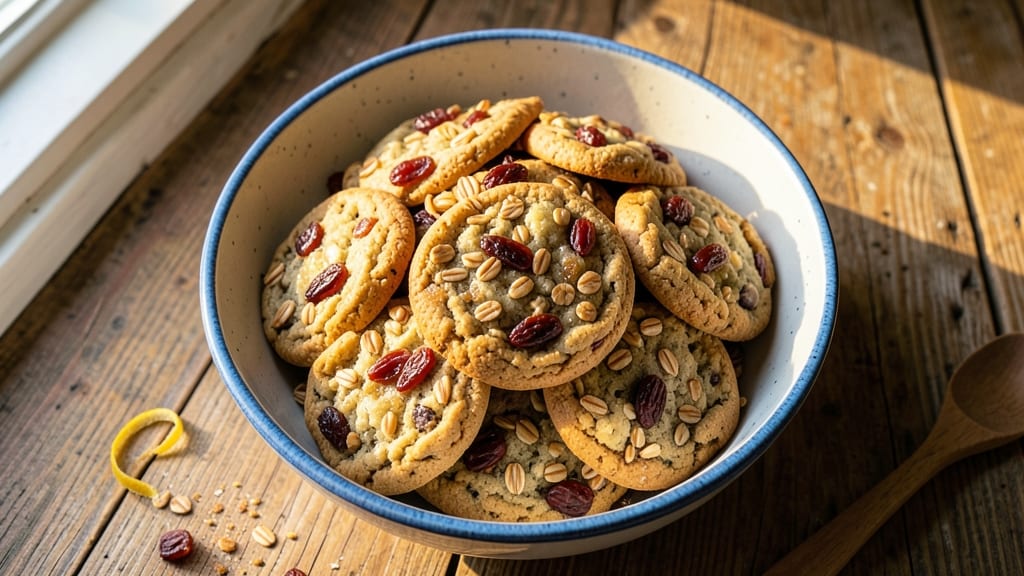
This chewy oatmeal raisin cookie recipe using Quaker oats delivers the perfect balance of tender crumb and caramelized raisins—no one will guess it's not from a bakery. The secret lies in a simple but critical technique: toasting the oats and soaking the raisins in rum or orange juice before baking.
I've perfected this recipe over years of testing, and it consistently produces cookies with that signature chewy texture and rich, buttery flavor.
The foundation starts with old-fashioned Quaker oats, which add hearty texture and a subtle nuttiness that pairs beautifully with brown sugar and butter. Unlike many recipes, we're not using quick oats here—their softer texture would compromise the chewiness we're after.
The dough gets chilled for at least 30 minutes, which prevents spreading and allows the flavors to meld together while you prepare the baking sheets.
What makes these cookies truly special is how the raisins transform during baking. The liquid they soak in keeps them plump, while the oven's heat caramelizes their edges into sweet, chewy pockets.
Each bite delivers warm spiced oats, tender cookie, and bursts of caramelized raisin—it's the kind of cookie that disappears within minutes of coming out of the oven. The aroma alone will have everyone gathering in the kitchen.
Perfect for holiday baking, potlucks, or satisfying that afternoon sweet tooth, these cookies stay fresh for up to a week in an airtight container. The recipe makes about two dozen, so you'll have plenty to share—or keep for yourself. Let's get baking!
Ingredients for chewy oatmeal raisin cookie recipe quaker
Old-fashioned oats and plump raisins soaked in rum—just nine ingredients for bakery-style chewiness.
| Ingredient | Amount | Notes |
|---|---|---|
| Old-Fashioned Quaker Oats 🌾 | 2 cups | Toasted in dry pan first |
| Unsalted Butter 🧈 | 1 cup | Cold and cubed for texture |
| Light Brown Sugar 🍚 | 1 cup | Packed firmly for accuracy |
| Granulated Sugar 🍚 | ½ cup | For crisp edges |
| Large Eggs 🥚 | 2 whole | Room temperature for blending |
| Vanilla Extract 🌿 | 2 tsp | Pure extract preferred |
| All-Purpose Flour 🌾 | 2 ½ cups | Spooning and leveling for accuracy |
| Baking Soda 🧂 | 1 tsp | For lift and texture |
| Ground Cinnamon 🌶️ | 1 ½ tsp | Freshly ground preferred |
| Sea Salt 🧂 | ½ tsp | Fine grain for balance |
| Raisins 🍇 | 1 ½ cups | Plump, seedless preferred |
| Dark Rum or Orange Juice 🍊 | ¼ cup | For soaking raisins |
The oats are non-negotiable here. Old-fashioned Quaker oats give that signature chewy texture—quick oats would turn these into a flat, cakey mess. Toast them in a dry pan for 5-7 minutes until golden and fragrant (that's the secret to depth). Trader Joe's and Target carry them in bulk bins, but any grocery store's oatmeal aisle will have them. For the raisins, seedless and plump is key—they should bounce back when squeezed. If yours are tough, soak them in warm water for 10 minutes first.
No rum? Orange juice works perfectly—the acidity helps caramelize the raisins. Subbing for raisins? Chopped dried apricots or dates add sweetness but lose that classic oatmeal flavor. The butter should be cold when you cream it with the sugars—this creates air pockets for that tender crumb. If you're worried about overmixing, use a stand mixer with the paddle attachment on low. And yes, you can use salted butter if you're in a pinch, but unsalted gives you control over the flavor.
This dough is best chilled for at least 30 minutes—it prevents spreading and lets the flavors meld. Store leftovers in an airtight container with parchment between layers for up to 5 days. Freeze the dough balls for 3 months—bake straight from frozen, adding 2 minutes to the time. Pro tip: Double the batch and freeze half. Holiday baking, solved.
Why You'll Love This Recipe
- Here’s what sold me: those Old-Fashioned Quaker Oats stay al dente while the edges get just crisp enough. The brown sugar caramelizes into a sticky, buttery pool that makes every bite worth the wait. (Yes, even on a Tuesday night.)
- No Mixer Needed: I swear by this recipe when my mixer’s acting up. Just cream the butter and sugars by hand—it takes two minutes—and the oats do all the heavy lifting. That egg binds it together so effortlessly, you’ll wonder why you ever baked anything else.
- Raise the Chew: Here’s what sold me: those Old-Fashioned Quaker Oats stay al dente while the edges get just crisp enough. The brown sugar caramelizes into a sticky, buttery pool that makes every bite worth the wait. (Yes, even on a Tuesday night.)
- Packable Magic: Between us, these are my go-to for lunchboxes or office snacks. They hold up for days—no sad, crumbly cookies here—and the raisins plump up perfectly if you pack them the night before. My kid’s teacher still asks for them by name.
Step-by-step instructions for chewy oatmeal raisin cookies
Here's how to make these legendary cookies with a secret twist for caramelized raisins.
👨🍳 Step 1: Toast the Oats and Soak the Raisins
First, toast the 2 cups Old-Fashioned Quaker Oats in a dry skillet over medium heat for 5-7 minutes, stirring constantly, until they're golden brown and smell nutty. This step deepens their flavor and prevents them from absorbing too much moisture in the dough. Transfer the toasted oats to a bowl and set aside.
In a separate small bowl, combine the 1.5 cups Raisins with the 0.25 cup Dark Rum or Orange Juice. Let them soak for at least 30 minutes—this plumps them up and gives them that signature chewy texture. If using rum, the cookies will have a subtle boozy depth, while orange juice adds brightness. Either way, the raisins will transform from dried to plump and juicy.
🍳 Step 2: Cream Butter and Sugars for Maximum Flavor
In a large mixing bowl, combine the 1 cup Unsalted Butter (cold and cubed) with the 1 cup Light Brown Sugar and 0.5 cup Granulated Sugar. Using a hand mixer or stand mixer, beat on medium speed for 3-4 minutes until the mixture is light and fluffy—it should nearly double in volume. This step incorporates air, which creates those signature crackly tops and chewy centers.
I like to scrape down the sides of the bowl every 30 seconds to ensure even mixing. The butter should be fully creamed but not melted—you should still see small butter pieces. This ensures the cookies stay tender rather than cakey. If the mixture looks too thick, don't worry; the eggs will come in next to loosen it up.
👨🍳 Step 3: Mix in Wet Ingredients and Dry Components
Add the 2 whole Large Eggs (room temperature) one at a time, mixing well after each addition. Then stir in the 2 tsp Vanilla Extract until fully combined. The mixture will look slightly curdled, but that's normal—it will smooth out when you add the dry ingredients.
In a separate bowl, whisk together the 2.5 cups All-Purpose Flour, 1 tsp Baking Soda, 1.5 tsp Ground Cinnamon, and 0.5 tsp Sea Salt. Gradually add the dry ingredients to the wet mixture, mixing on low speed just until combined—do not overmix. Overworking the dough develops gluten, which makes cookies tough instead of chewy.
🥘 Step 4: Fold in Toasted Oats and Soaked Raisins
Using a silicone spatula, gently fold in the toasted oats and the soaked raisins (with their juices) into the dough. The dough will be thick and sticky, but that's exactly what we want for chewy cookies. If it feels too wet, let it rest in the fridge for 10-15 minutes—this helps the flour absorb the moisture and makes it easier to handle.
Here's the secret: the toasted oats add a nutty crunch, while the soaked raisins burst with juicy sweetness in every bite. The combination of warm spices and caramelized raisins makes these cookies irresistible. Once fully mixed, cover the bowl with plastic wrap and refrigerate for at least 1 hour (or up to 24 hours). Chilling firms up the butter, which prevents excessive spreading in the oven.
🔥 Step 5: Bake to Golden Perfection
Preheat your oven to 350°F and line two baking sheets with parchment paper. Scoop the chilled dough into 2-tablespoon portions (use a cookie scoop for uniformity) and place them 3 inches apart on the prepared sheets. The dough will hold its shape better after chilling, so you won't have to worry about them flattening too much.
Bake for 12-14 minutes until the edges are golden brown but the centers still look slightly underdone. They'll continue cooking on the hot pan after you remove them from the oven. Let them cool on the baking sheet for 5 minutes before transferring to a wire rack. The cookies will firm up as they cool, but they'll still be soft and chewy inside with a crispy edge.
Pro Tips For Making Chewy Oatmeal Raisin Cookie Recipe Quaker
- CHILL THE DOUGH: After mixing everything, pop the dough in the fridge for at least 30 minutes—yes, even if you’re eager to bake. I used to skip this and ended up with cookies that spread like pancakes and stayed dense. Cold dough holds its shape better and develops deeper flavor while you wait.
- TOAST THE OATS: Spread the Old-Fashioned oats on a baking sheet and toast them at 350°F for 5–7 minutes until they smell nutty and turn slightly golden. This step cuts the raw oat flavor and adds a caramelized bite that makes the cookies irresistibly chewy. (Skip this, and you’ll taste the difference.)
- UNDERMIX THE BUTTER: Cream the butter and sugars until the mixture is just combined—no need to beat it into a fluffy mess. Overworking it adds air, which leads to cookies that spread too much and lose that classic chewy texture. Think "smooth but still slightly grainy," not "light and airy."
- USE RAISINS FROM A CAN: Drain raisins from a can, rinse them in warm water, then toss with a teaspoon of flour before folding into the dough. The flour keeps them from sinking to the bottom, and the canned raisins are plumper and sweeter than dried ones straight from the package. (Your cookies will thank you.)
Dietary considerations for this dish
Gluten-Free Adaptation
Swap the all-purpose flour for a 1:1 gluten-free baking flour blend like King Arthur Measure for Measure or Bob's Red Mill. These blends include xanthan gum for structure. For best texture, use 2.5 cups of the blend in place of the original flour.
Add ½ tsp extra baking soda to compensate for lower leavening in gluten-free flours. 🌾
Vegan Substitutions
Replace butter with 1 cup vegan butter (like Miyoko's or Earth Balance) or ½ cup coconut oil (solid at room temp). For eggs, use 2 tbsp ground flaxseed + 6 tbsp water per egg—mix and let sit for 5 minutes to thicken.
The dough may be slightly stickier, so chill for 45 minutes before scooping to prevent spreading. 🥥
Nut-Free Option
Skip the toasted oats entirely and replace them with 2 cups crushed cornflakes or 1.5 cups shredded coconut for texture. The cornflakes add a subtle crunch while keeping the cookie chewy. For extra flavor, add ½ tsp more cinnamon to compensate for the missing oat nuttiness. 🌊
Lower Sugar Version
Reduce brown sugar to ½ cup and granulated sugar to ¼ cup, replacing the difference with ½ cup unsweetened applesauce. This keeps moisture while cutting sugar by 30%.
The cookies will be slightly less caramelized but still chewy. Pair with dark chocolate chips instead of raisins for extra richness. 🍎
Allergen-Friendly Notes
For nut allergies, oatmeal raisin cookies are naturally safe if made with certified gluten-free oats (check for cross-contamination warnings). For egg allergies, use aquafaba (chickpea brine) as an egg replacer—3 tbsp aquafaba per egg works well. Always verify ingredient labels for hidden allergens like dairy in flavorings. 🚫
Nutrition facts
Frequently asked questions
Why do I need to toast the oats?
Toasting the oats enhances their nutty flavor and prevents them from absorbing too much moisture in the dough, which keeps the cookies chewy rather than cakey. The golden-brown color also adds visual appeal and depth to each bite.
Can I use quick oats instead of old-fashioned Quaker oats?
No, quick oats will make your cookies flat and cakey instead of chewy. Old-fashioned oats have a coarser texture that holds up better during baking and creates that signature hearty bite.
How do I prevent my cookies from spreading too much?
Chill the dough for at least 30 minutes before baking—this firms up the butter and prevents excessive spreading. Also, scoop dough balls with a 2-tablespoon scoop and place them 3 inches apart on the baking sheet for proper airflow.
What if my raisins stay hard even after soaking?
Soak them in warm water for 10 minutes first to soften, then proceed with the rum or orange juice soak. For extra tenderness, chop them slightly before adding to the dough. Hard raisins won't caramelize properly during baking.
Can I make these cookies ahead of time?
Yes! The dough can be refrigerated for up to 24 hours or frozen for 3 months. Bake straight from frozen, adding 2 minutes to the baking time. Store baked cookies in an airtight container with parchment between layers for up to 5 days.