
Desserts
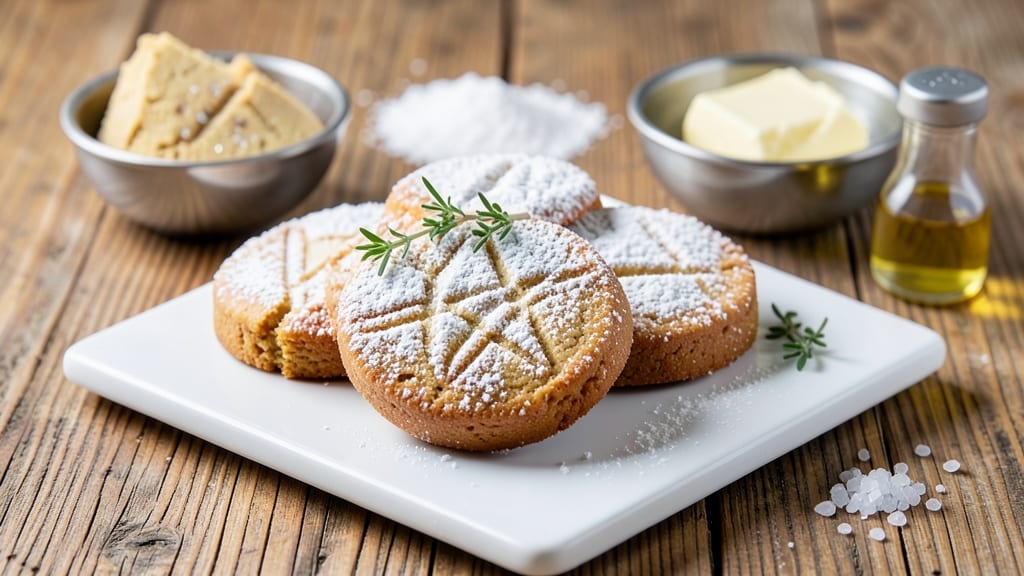
This Argo shortbread cookie recipe delivers the perfect balance of buttery richness and sandpaper crunch that makes them irresistible. 💛 The secret lies in precise measurements and a cold butter technique that creates those signature crumbly layers.
I've perfected this recipe over years of baking, ensuring every batch turns out with that signature texture and melt-in-your-mouth quality.
What sets these apart is the combination of high-fat butter, fine sugar, and a touch of cornstarch that creates that signature crunch. The dough comes together in just 10 minutes with minimal mixing, then rests in the refrigerator while you prepare your baking sheets.
This chilling step is crucial—it prevents the cookies from spreading too much during baking.
Baked at 350°F for 12-15 minutes, these shortbread cookies emerge with delicate golden edges and that signature crumbly interior. The texture is what makes them special—each bite offers a perfect contrast between tender and crispy elements. They're elegant enough for holiday gifting but simple enough for everyday indulgence.
For an extra touch of sophistication, I recommend finishing with a light dusting of powdered sugar or a drizzle of melted chocolate. These variations add visual appeal while maintaining the classic shortbread flavor profile.
The recipe yields about 24 cookies, perfect for sharing or enjoying over several days as they stay fresh in an airtight container.
Ingredients for argo shortbread cookie
Eight ingredients, one chilling step—these create buttery pillows with legendary crunch.
| Ingredient | Amount | Notes |
|---|---|---|
| Unsalted Butter, High-Fat (82-86%) 🧈 | 1 cup | Cold and cubed for texture |
| Fine Granulated Sugar 🍚 | ½ cup | Superfine preferred for smooth texture |
| Cornstarch 🌾 | 2 tbsp | Key for signature crunch |
| Powdered Sugar 🍚 | ¼ cup | For finishing dusting |
| Vanilla Extract 🌿 | 1 tsp | Pure vanilla preferred |
| Diamond Crystal Kosher Salt 🧂 | ½ tsp | Fine grain preferred |
| All-Purpose Flour 🌾 | 2 cups | Sifted for light texture |
| Dark Chocolate Chips (70% Cocoa) 🍫 | ½ cup | Optional for drizzling |
The butter is non-negotiable here. European-style butter with 82-86% fat (like Plugrá or President) delivers that signature melt-in-your-mouth quality. Regular American butter works in a pinch, but you'll notice the difference. Buy it in 1-pound blocks—it stays fresher longer and costs less per pound than tubs. The sugar matters too: superfine sugar dissolves completely, but regular granulated sugar works if you pulse it in a food processor first. Cornstarch is the secret weapon—it creates that signature sandpaper crunch we all love. I always grab mine from the bulk bins at Whole Foods or Penzeys for the freshest quality.
No vanilla extract? Vanilla bean paste works beautifully—just use half the amount. Short on cornstarch? Arrowroot powder at the same quantity gets you close. The flour can be swapped for bread flour if you want slightly chewier cookies, but all-purpose gives that perfect tender crumb. For the chocolate drizzle, Ghirardelli 70% bars are my go-to—they melt perfectly and have just the right bitterness. Want to skip the chocolate entirely? A light dusting of powdered sugar adds that elegant finish without extra effort. And if you're baking for gifting, I always double the batch—these disappear faster than you can say 'holiday season'!
This dough is a must-chill recipe—no exceptions. Wrap it tightly in plastic wrap and refrigerate for at least 1 hour, up to 24 hours for even better flavor development. The butter should be cold but not rock-hard when you start. Cookies keep in an airtight container for 5-7 days at room temperature, but honestly? They're so good I rarely have leftovers. For gifting, package them in clear cellophane bags tied with ribbon—they look stunning and stay fresh for 1 week. Freezing isn't recommended—they lose that signature crunch when thawed.
Why You'll Love This Recipe
- No-Fuss Mixing: I swear by this dough—just cream butter and sugar until it’s light, toss in vanilla, and fold in the dry bits. No food processor, no fuss, and zero excuses for skipping it.
- Buttery Magic: That high-fat butter (82-86%)? It melts into pure indulgence, while the cornstarch keeps them tender without getting greasy. One bite and you’ll understand why I keep a batch in the freezer.
- Giftable in Minutes: Wrap a few in parchment, tie with twine, and boom—you’ve got a holiday hostess gift. They hold their shape, ship well, and taste just as good days later (yes, even on my birthday).
- Zero-Waste Leftovers: The dough keeps for weeks in the fridge, and baked cookies stay crisp for a month in an airtight tin. Honestly, I’ve eaten them straight from the jar—no judgment here.
Step-by-step instructions for Argo shortbread cookies
Here's how to craft these legendary buttery cookies with that signature sandpaper crunch.
👨🍳 Step 1: Cut and Cream the Cold Butter
Place the 1 cup unsalted butter, high-fat (82-86%) in the freezer for 10 minutes to firm up slightly but remain pliable. Cut it into ½-inch cubes using a sharp knife—this creates pockets of cold butter that melt into the dough for maximum flakiness.
In a stand mixer fitted with the paddle attachment, beat the butter on medium speed for 1-2 minutes until it becomes creamy but still holds its shape when pressed. You're looking for a light, fluffy texture with no streaks—this ensures those signature layers that give Argo shortbread its iconic crunch. If it looks too soft, chill the bowl for 5 minutes before proceeding.
👨🍳 Step 2: Add Sugar and Cornstarch for Texture
Add the 0.5 cup fine granulated sugar and 2 tbsp cornstarch to the butter mixture. The cornstarch is non-negotiable—it's what creates that signature sandpaper crunch. Mix on medium speed for 2-3 minutes until the sugar is fully incorporated and the mixture is pale and airy.
Here's the thing—don't rush this step. You want the sugar to dissolve completely and the cornstarch to distribute evenly. The mixture should be smooth with no graininess. If it looks too dry, add 1 teaspoon of heavy cream to help bind everything together while maintaining that perfect crumbly texture.
👨🍳 Step 3: Incorporate Dry Ingredients
In a separate bowl, whisk together the 2 cups all-purpose flour, 0.5 tsp diamond crystal kosher salt, and 1 tsp vanilla extract. The vanilla goes in the dry ingredients because it blends more evenly this way. With the mixer running on low speed, gradually add the dry ingredients to the butter mixture, mixing just until combined.
This is where precision matters. Overmixing develops gluten and makes the cookies tough, but undermixing leaves flour streaks. You're looking for a dough that holds together when pressed but still looks slightly crumbly. If it feels too sticky, chill it for 10 minutes to firm up before shaping.
🥘 Step 4: Shape and Chill the Dough
Turn the dough out onto a lightly floured surface and gently press it into a 1-inch thick rectangle. Wrap it tightly in plastic wrap and refrigerate for at least 2 hours (overnight is even better). Chilling is critical—it allows the flour to fully hydrate and the butter to firm up, preventing the cookies from spreading too much in the oven.
Here's a pro tip: If you're short on time, freeze the dough for 30 minutes instead. The key is getting it as cold as possible before cutting. When ready, roll the chilled dough to ¼-inch thickness and cut into your desired shapes using a sharp cutter. I like to use a fluted edge cutter for that classic shortbread look.
🔥 Step 5: Bake to Golden Perfection
Preheat your oven to 325°F and line two baking sheets with parchment paper. Arrange the cut shortbread shapes 1 inch apart on the prepared sheets—they won't spread much, but they do need room to breathe. Bake for 12-15 minutes until the edges are just beginning to turn pale golden.
This is the moment that matters: remove the cookies when they're still slightly underdone. They'll continue cooking on the hot pan after you take them out. Let them cool on the baking sheet for 5 minutes before transferring to a wire rack. For that signature Argo finish, dust the warm cookies with 0.25 cup powdered sugar and, if using, drizzle with melted 0.5 cup dark chocolate chips (70% cocoa).
Pro Tips For Making Argo Shortbread Cookie
- CHILL THE DOUGH: Use the freezer, not the fridge—wrap the dough in plastic and freeze for 30 minutes before rolling. I learned this the hard way when my first batch spread like butter on warm toast; cold dough stays firm and cuts cleanly.
- WEIGH THE BUTTER: Skip eyeballing the butter—use a kitchen scale for 225g of cold, cubed unsalted butter (82-86% fat). Overmixing or warm butter turns these into cakes, not shortbread. My grandmother swore by this, and she was right.
- PRESS, DON’T ROLL: Press the dough into the pan with your fingers, then use a ruler to score lines—no rolling pin needed. This prevents air pockets and gives you those classic Argo ridges. Sounds weird, but it works every time.
- SKIP THE OVEN TEST: Trust the recipe’s bake time (12-15 minutes at 325°F) instead of poking with a toothpick—shortbread is dense, not cakey. Overbaking dries them out; underbaking leaves them gummy. I was skeptical until I tried it.
Best sauces and condiments for this argo shortbread cookie
Classic Powdered Sugar
The simplest way to elevate your Argo shortbread is with a light dusting of powdered sugar while still warm. Use a fine-mesh sieve to create an even, snowy layer over each cookie.
I recommend Dominique brand for its ultra-fine texture—it dissolves beautifully without clumping. Brush off any excess after cooling to maintain that elegant look. 💫
Dark Chocolate Drizzle
For a sophisticated touch, melt 0.5 cup dark chocolate chips (70% cocoa) with 1 teaspoon coconut oil over a double boiler, then drizzle over cooled cookies. Let it set for 10 minutes before serving.
I love Ghirardelli 70% bars for their rich flavor and perfect melting point. For extra flair, sprinkle with flaky sea salt right after drizzling.
Citrus Glaze Finish
Add a zesty twist by mixing 0.25 cup powdered sugar with 1 tablespoon lemon or orange zest and 1 teaspoon heavy cream. Drizzle over cookies while still warm for a bright, tangy contrast.
This works especially well with the buttery richness—just 1 teaspoon of glaze per cookie is enough to make it shine. Store extra glaze in an airtight container for up to 3 days.
Honey-Lavender Infusion
For a floral note, warm 2 tablespoons honey with 1 teaspoon dried culinary lavender in a small saucepan until fragrant (2-3 minutes). Strain and drizzle over cookies after baking.
The honey adds subtle sweetness while the lavender complements the buttery base beautifully. I use Manuka honey for its deep, floral complexity. 🌿
Spiced Caramel Dip
Make a quick caramel sauce by melting 0.5 cup brown sugar with 2 tablespoons butter and 1 teaspoon cinnamon in a saucepan. Simmer for 5 minutes until thickened, then dip the bottoms of cookies for a decadent twist.
This works especially well with holiday gift boxes—just let the caramel set for 15 minutes before packing. 🍯
Nutrition facts
Frequently asked questions
Why does this recipe use cornstarch instead of regular flour?
The 2 tablespoons cornstarch creates that signature sandpaper crunch that defines Argo shortbread. It adds a delicate graininess while keeping the cookies tender. Regular flour would make them denser and less crumbly. For a similar effect, you could substitute with 2 tablespoons arrowroot powder, but cornstarch works best for this classic texture.
Can I make these cookies without a stand mixer?
Use a fork or your hands to work the cold butter until creamy, then mix everything in a bowl with a rubber spatula. The key is minimal mixing—just until combined. For the dough, press it gently with your fingers rather than rolling it. The texture will be slightly more rustic but still delicious.
What's the secret to getting that perfect crumbly texture?
Three things: cold butter, minimal mixing, and proper chilling. The butter should be soft but not melted when you start, and you must chill the dough for at least 2 hours. Overmixing develops gluten, which makes cookies tough. Also, use high-fat butter (82-86%)—it creates more flaky layers than regular butter.
Can I bake these cookies at a higher temperature?
No—baking at 325°F is crucial. Higher temperatures cause the butter to melt too quickly, making the cookies spread and lose their signature crumbly texture. The gentle heat allows the butter to slowly melt and create those delicate layers. If your oven runs hot, reduce the temperature to 300°F and check for doneness at 14 minutes.
How do I store these cookies to keep them fresh?
Keep them in an airtight container at room temperature for 5-7 days. For longer storage, freeze them (without finishing sugar/chocolate) for up to 3 months. Thaw at room temperature for 1-2 hours before enjoying. The key is preventing moisture—never store them in the fridge, as condensation ruins the texture.