
Desserts
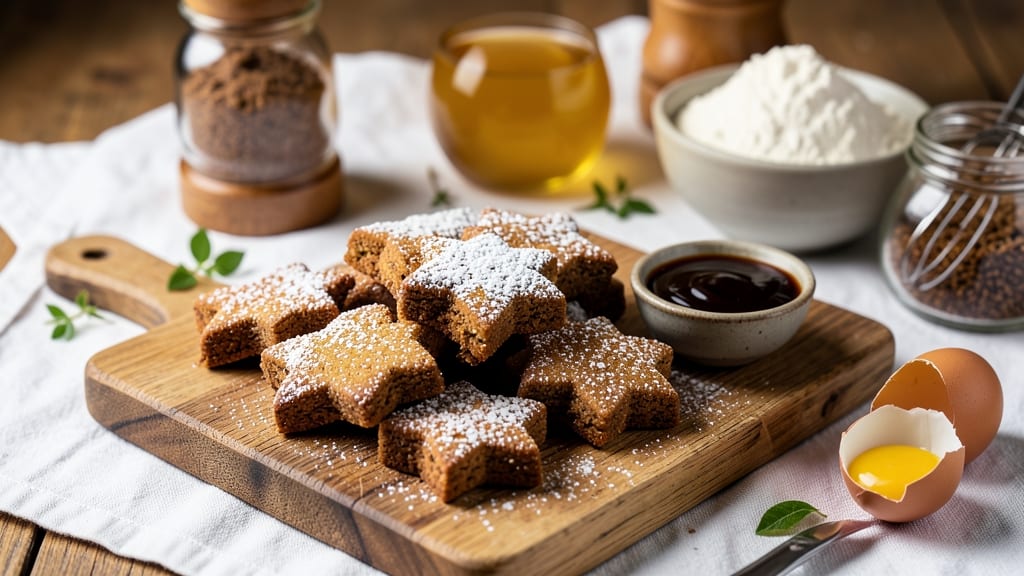
This authentic German gingerbread cookie recipe brings the warm, spiced flavors of Lebkuchen straight to your kitchen—crunchy edges, soft centers, and that signature molasses depth. 🌟 The secret lies in the perfect balance of honey, molasses, and traditional spices like cinnamon, cloves, and ginger, which create a rich, aromatic profile that’s been a Christmas staple for centuries.
What sets these apart from store-bought versions is the chilling step—letting the dough rest overnight intensifies the flavors and ensures a tender crumb. The dough is rolled thin and cut into classic shapes, then baked until golden, creating that ideal contrast between crispy exterior and soft interior.
This recipe stays true to German tradition while being approachable for home bakers.
By the time these cookies emerge from the oven, your kitchen will smell like a German Christmas market, and every bite will deliver layers of warm spice, caramelized molasses, and just the right amount of sweetness.
The optional glaze or icing adds a festive touch, but even plain, they’re irresistible—perfect for gifting, holiday baking, or enjoying with a cup of tea.
Whether you’re baking for the holidays or simply craving a taste of tradition, these authentic German gingerbread cookies deliver the same flavors that have been cherished for generations. Let’s get started on creating your own batch of this beloved treat.
Ingredients for authentic german gingerbread cookie
Fourteen ingredients, centuries of tradition—just a few hours to German Christmas magic.
| Ingredient | Amount | Notes |
|---|---|---|
| All-Purpose Flour 🌾 | 4 cups | Sifted for light texture |
| Dark Brown Sugar 🍚 | 1 ½ cups | Packed firmly |
| Molasses 🍯 | 1 cup | Unsulphured preferred |
| Honey 🍯 | ½ cup | Wildflower or clover |
| Granulated Sugar 🍚 | ½ cup | For balance |
| Large Eggs 🥚 | 2 whole | Room temperature |
| Unsalted Butter 🧈 | ½ cup | Cold, cubed |
| Ground Ginger 🌿 | 2 tbsp | Freshly ground preferred |
| Ground Cinnamon 🌶️ | 1 ½ tbsp | Ceylon preferred |
| Ground Cloves 🌿 | 1 tsp | Freshly ground |
| Ground Nutmeg 🌿 | ½ tsp | Freshly grated |
| Salt 🧂 | ½ tsp | Diamond Crystal preferred |
| Baking Soda 🧪 | 1 tsp | For lift |
| Vanilla Extract 🍯 | 1 tbsp | Pure Madagascar |
| Heavy Cream 🥛 | ½ cup | Cold for cutting |
| Powdered Sugar 🍚 | 1 cup | For optional glaze |
| Almond Extract 🌿 | ½ tsp | For glaze depth |
The molasses and honey are non-negotiable here—unsulphured molasses from Whole Foods or a German market delivers that deep, caramelized flavor. For honey, local wildflower adds complexity, but clover works fine too. The spices? Freshly ground is ideal, but if you’re using pre-ground, Penzeys or bulk bins at natural stores have the best quality. The butter should be cold and cubed—this keeps the dough from getting too soft during the chilling step, which is key for those crisp edges. If you’re feeling ambitious, European-style butter (like Plugrá) adds an extra layer of richness.
No molasses? Dark corn syrup plus a splash of coffee mimics the depth, though it won’t be identical. Running short on honey? Maple syrup works at a 1:1 ratio, but the flavor will lean more maple-forward. The vanilla and almond extracts can be swapped for vanilla bean paste or a splash of rum—both add warmth. For the glaze, if you don’t have almond extract, orange zest or a pinch of cinnamon—trust me, it still tastes festive. The dough is sticky, so don’t stress if it feels messy—it’s supposed to be! Use a food-safe silicone spatula—they’re your best friend for scraping out every last bit.
This dough needs 24 hours in the fridge—no shortcuts. The longer it rests, the more intense the flavors become. Wrap tightly in plastic wrap or store in an airtight container. The baked cookies keep for 2 weeks—if they last that long—stored in a cool, dark place. For gifting, the glaze sets beautifully, making them perfect for holiday presents. Freeze unbaked dough balls for up to 3 months—just add 10 minutes to baking time when ready.
Why You'll Love This Recipe
- One-Bowl Wonder: I swear by this recipe—just mix, roll, cut, and bake. No fancy equipment, no extra steps, and honestly, even if you mess up the shape, they still taste like Christmas morning.
- Molasses Magic: That deep, rich molasses paired with honey? It’s like a warm hug in cookie form. The brown sugar caramelizes just enough to give every bite a subtle chew, and the ginger adds a cozy kick without overpowering.
- Holiday Any Day: Between us, these aren’t just for Christmas. Stash them in jars for last-minute gifts, pack them in lunches, or serve them with coffee when friends drop by. My kids even ask for them on random Tuesday afternoons.
- Budget-Friendly Staples: Flour, sugar, and molasses? Pantry basics that won’t break the bank. A single batch makes 30 cookies, and they keep for weeks in an airtight container—so you’re basically making free snacks for months.
Step-by-step instructions for authentic German gingerbread cookies
Here's the traditional method that delivers that perfect molasses crunch with tender centers.
👨🍳 Step 1: Combine Wet Ingredients for Maximum Flavor
In a large mixing bowl, combine the 1 cup molasses, 0.5 cup honey, and 0.5 cup granulated sugar. I like to use a whisk for this step to ensure everything blends smoothly. The molasses should be at room temperature—this prevents the dough from becoming too stiff later.
Next, add the 2 whole large eggs and 1 tbsp vanilla extract, mixing until fully incorporated. Here's the thing—German gingerbread relies on the balance between sweetness and spice, so don't skip the vanilla. It rounds out the bold flavors of molasses and spices beautifully. The mixture should be thick but pourable at this stage.
Finally, add the 0.5 cup cold unsalted butter, cubed, and mix until fully combined. The butter should be cold to prevent the dough from becoming too soft during mixing. You'll notice the mixture thicken slightly as the butter emulsifies with the wet ingredients.
👨🍳 Step 2: Mix Dry Ingredients and Gradually Combine
In a separate bowl, sift together the 4 cups all-purpose flour, 1.5 cups dark brown sugar, 2 tbsp ground ginger, 1.5 tbsp ground cinnamon, 1 tsp ground cloves, 0.5 tsp ground nutmeg, 0.5 tsp salt, and 1 tsp baking soda. Sifting is crucial here—it aerates the flour and prevents dense cookies. The spices should be freshly ground if possible; pre-ground spices lose potency quickly.
With the mixer on low speed, gradually add the dry ingredients to the wet mixture. I use a spatula to scrape down the sides of the bowl as I go—this ensures even distribution of the spices throughout the dough. Mix just until combined; overmixing develops gluten and makes the cookies tough. The dough should be thick and slightly sticky but manageable.
Add the 0.5 cup cold heavy cream and mix briefly to incorporate. The cream adds moisture and helps create that signature soft center. If the dough feels too sticky to handle, chill it for 15 minutes before proceeding. This step is especially important in warmer kitchens where the butter might soften too quickly.
🔥 Step 3: Chill and Shape for Perfect Texture
Transfer the dough to a large piece of plastic wrap and flatten it into a rectangle about ½-inch thick. Wrap tightly and refrigerate for at least 2 hours—overnight is even better. Chilling firms up the butter and allows the flour to fully hydrate, which prevents excessive spreading during baking and ensures that perfect crunchy exterior with a soft center.
Here's where authenticity matters: traditional German gingerbread is often cut into elaborate shapes. Use cookie cutters to create stars, trees, or other festive shapes. For classic gingerbread men, use a knife to cut out the shapes. Place the cut dough pieces on parchment-lined baking sheets, spacing them about 2 inches apart—they'll spread slightly during baking.
Preheat your oven to 350°F while the dough chills. The oven should be fully preheated before baking—this ensures even cooking and proper rise. I like to bake two sheets at a time for efficiency, but don't overcrowd the pan or the cookies won't brown properly.
🔥 Step 4: Bake to Golden Perfection
Bake the gingerbread for 10-12 minutes until the edges are deep golden brown and the centers still look slightly underdone. They'll continue cooking on the hot baking sheet after you remove them. The key is to pull them out when they're just set in the middle—they should spring back slightly when pressed gently.
Let the cookies cool on the baking sheet for 5 minutes before transferring to a wire rack. This brief resting period prevents them from cracking as they cool completely. The centers should remain soft and chewy while the edges develop that satisfying crunch. If you want extra assurance, insert a toothpick into the center—it should come out with a few moist crumbs but no wet batter.
🍽️ Step 5: Optional Glaze and Serving
While the cookies cool, prepare the optional glaze by whisking together 1 cup powdered sugar, 0.5 cup heavy cream, 0.5 tsp almond extract, and a pinch of salt. The glaze should be thick enough to coat a spoon but still drizzle smoothly. I find that adding the almond extract at this stage enhances the overall flavor profile without overpowering the gingerbread.
Drizzle the glaze over the cooled cookies and let it set for 10 minutes before serving. The glaze adds a beautiful finish and complements the warm spices perfectly. For an authentic touch, dust the cookies with additional powdered sugar before serving. These cookies are best enjoyed at room temperature, where the contrast between the crisp edges and soft centers truly shines.
Pro Tips For Making Authentic German Gingerbread Cookie
- Chill the Dough: I learned this the hard way—skipping the fridge means cookies that spread into sad, flat pancakes. Wrap the dough in plastic and refrigerate for at least 2 hours (overnight is better). The cold fat firms up, so your cookies hold their shape and develop that perfect chewy-crisp edge.
- Whisk the Molasses: Store-bought molasses is thick enough to clog your measuring cup. Pour it into a small bowl first, then whisk it with a fork until smooth—this guarantees an even ¼ cup without clumps ruining your batch. (Yes, even if you’re impatient like me.)
- Bake One Sheet: German gingerbread needs space to breathe. Overcrowding the pan steams the cookies, making them dense and gummy. Bake one sheet at a time, even if it means extra time in the oven. Your future self will thank you for that crisp, spiced edge.
- Mix Dry Ingredients First: Sifting the flour, spices, and baking soda together cuts out lumps and ensures even distribution—especially important for gingerbread’s bold flavor. I skip this when I’m lazy, but the dish is noticeably better when I don’t. (Your taste buds will notice the difference.)
Flavor customization for this dish
Spice Level Control
Adjust the spice blend to suit your taste—start with the 2 tbsp ground ginger and 1.5 tbsp cinnamon as written, but reduce the 1 tsp cloves and 0.5 tsp nutmeg by half if you're sensitive to strong flavors.
For a milder version, swap ½ tsp ground ginger and 1 tsp cinnamon instead. The key is balancing warmth without overpowering the molasses sweetness. 🌶️
Sweetness Variations
Swap out the 1 cup molasses for ½ cup molasses plus ½ cup maple syrup if you prefer a less intense flavor. For extra richness, replace 0.5 cup granulated sugar with 0.5 cup light brown sugar—it adds moisture and caramel notes.
If you love caramelized depth, add 1 tbsp dark corn syrup—it mimics the molasses complexity beautifully.
Moisture Adjustments
For softer cookies, increase the 0.5 cup heavy cream—add another 2 tbsp—but don’t exceed ⅔ cup or the dough will be too sticky. If your kitchen is humid, reduce the cream by 1 tbsp—the dough should hold its shape when chilled.
For extra chewiness, fold in ¼ cup chopped crystallized ginger—it adds texture and a bright, zesty kick.
Texture Tweaks
Want crunchier cookies? Replace ½ cup cold butter—use ½ cup shortening—it stays firm longer and prevents spreading. For a tender crumb, add 2 tbsp sour cream—it keeps the centers soft.
If you love a cake-like texture, reduce the flour to 3½ cups—just enough to hold the dough together without making it dense.
Flavor Boosters
Add 1 tsp orange zest—it brightens the molasses with citrusy notes. For depth, swap the vanilla extract for 1 tbsp vanilla bean paste—it adds flecks of vanilla that melt in your mouth.
A pinch of cardamom—just ¼ tsp—pairs beautifully with the ginger and cinnamon. For a boozy twist, replace 1 tbsp vanilla—with 1 tbsp rum or brandy—**it enhances the caramelized flavors.
Nutrition facts
Frequently asked questions
Why does the dough need to chill overnight?
The overnight chill is essential for authentic texture and flavor development. It allows the molasses and spices to meld together, creating deeper, more complex flavors. The cold butter firms up, preventing excessive spreading during baking and giving those crisp edges with soft centers that make these cookies irresistible.
Can I make these cookies without molasses?
Yes, but the flavor will differ. Replace the 1 cup molasses with ½ cup molasses plus ½ cup maple syrup for a milder taste, or use ½ cup dark corn syrup plus 1 tsp coffee to mimic molasses' depth. The cookies will still be delicious but won't have that classic German gingerbread character.
How do I store leftover gingerbread?
Store cookies in an airtight container at room temperature for up to 2 weeks. For longer storage, freeze unbaked dough balls for 3 months or baked cookies for 2 months. To refresh, warm frozen cookies at 300°F for 5-10 minutes until crisp again. The glaze may soften slightly after freezing.
What's the secret to getting crisp edges?
Three key factors: cold butter (never softened), proper chilling (minimum 2 hours in fridge), and baking at 350°F until edges are deep golden brown. Avoid overbaking—they'll crisp more as they cool. For extra assurance, bake on the middle rack where heat circulates evenly.
Can I decorate these with icing like American gingerbread?
The traditional German approach uses simple powdered sugar glaze, but you can absolutely pipe royal icing or use melted chocolate for decoration. For authentic German style, try marzipan (almond paste) or candied fruit between layers. The key is to let the glaze set for 10 minutes before serving.