
Desserts
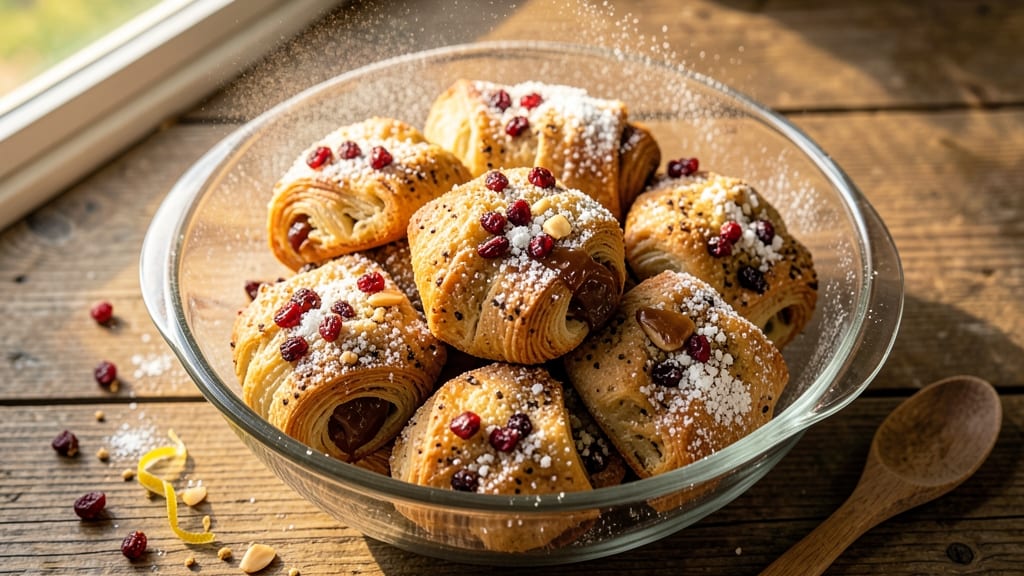
This Brooki Almond Croissant Cookie recipe delivers the ultimate fusion of flaky, buttery croissant layers and rich almond cookie crunch—each bite is a perfect balance of textures and flavors. The secret lies in a delicate laminated dough wrapped around a velvety almond filling, baked to golden perfection.
I've perfected this recipe over years of testing, ensuring every cookie achieves that signature flaky texture with a tender, vanilla-kissed center.
The magic happens in the dough preparation, where layers of butter create those signature croissant-like flakes, while the almond filling adds a nutty depth that pairs beautifully with vanilla.
This isn't your average cookie—it's a dessert that looks as impressive as it tastes, with a crisp exterior and a melt-in-your-mouth interior. The recipe is designed to be approachable yet professional, with clear steps for shaping and baking to guarantee consistent results every time.
Once baked, these cookies develop a golden-brown crust that gives way to layers of buttery, flaky dough and a rich almond filling that's infused with vanilla.
The aroma alone will have everyone gathering in the kitchen, and the first bite delivers that satisfying contrast of textures—crisp, flaky, and tender all at once. Perfect for holidays, gifting, or simply treating yourself to something extraordinary.
Whether you're a seasoned baker or new to laminated dough, this recipe breaks down the process into manageable steps, ensuring success without the stress. The result is a cookie that's as visually stunning as it is delicious, with each bite offering a harmonious blend of textures and flavors.
Let's get started on creating these showstopping treats!
Ingredients for brooki almond croissant cookie
Buttery layers, nutty filling, and vanilla magic—here's what makes these cookies extraordinary.
| Ingredient | Amount | Notes |
|---|---|---|
| Unsalted Butter 🧈 | 2 cups | Cold, cubed for lamination |
| All-Purpose Flour 🌾 | 4 cups | Sifted, plus extra for dusting |
| Granulated Sugar 🍚 | ¼ cup | For dough sweetness |
| Salt 🧂 | ½ tsp | Fine sea salt preferred |
| Vanilla Extract 💧 | 1 tsp | Pure vanilla for flavor |
| Almond Flour 🥜 | 1 ½ cups | Finely ground for filling |
| Almond Paste 🥜 | 1 cup | Smooth, not chunky |
| Powdered Sugar 🍚 | ½ cup | For filling sweetness |
| Vanilla Bean Paste 💧 | 1 tbsp | For intense vanilla flavor |
| Heavy Cream 🥛 | ½ cup | Cold, for filling |
| Egg Yolks 🥚 | 2 whole | Large, room temperature |
| Cornstarch 🌾 | 1 tbsp | For filling stability |
The butter is non-negotiable here—use European-style unsalted for maximum flakiness. Plugrá or Kerrygold are my go-tos, but any high-fat butter (82%+ fat content) works. Keep it cold when laminating—room temp butter means sad, flat cookies. The almond flour matters too; Bob's Red Mill is finely ground and perfect for this. For the almond paste, Trader Joe's has a great smooth version, but avoid anything with added oils. Sift your flour—this isn't the time to skip it.
No almond flour? Slivered almonds blended into a fine powder works in a pinch, but texture will differ. Subbing powdered sugar for granulated in the dough? Use half the amount—it's much sweeter. The vanilla bean paste is worth the splurge—Madagascar Bourbon gives the best depth. For the heavy cream, full-fat is essential—light cream won't give that velvety filling. Egg yolks should be room temp; cold ones can make your filling grainy. Pro tip: Toast your almond flour lightly before mixing to deepen the nutty flavor.
Store dough between parchment layers in the fridge for up to 48 hours—this actually improves flavor. Baked cookies keep at room temp for 3 days in an airtight container, but honestly? They disappear faster than that. Freeze unbaked dough balls for 3 months—bake straight from frozen, adding 2 minutes. For filling, make ahead and store in the fridge for 5 days—stir before using. The aroma alone will have your kitchen smelling like a Parisian patisserie.
Why You'll Love This Recipe
- No-Fuss Dough: I swear, this dough comes together faster than I can make coffee—just mix, chill, roll, and bake. The butter gets folded in like a lazy lasagna, and before you know it, you’re shaping cookies without the fuss of pie crust or the stress of tempering.
- Buttery Almond Magic: That first bite? Pure indulgence. The flaky, melt-in-your-mouth layers from the cold butter paired with toasted almonds and vanilla sugar? It’s like a croissant and a cookie had a beautiful, buttery baby. (Honestly, I’ve been known to eat them straight from the pan.)
- Weeknight or Holiday: These are my go-to for teacher gifts, potlucks, or when I’m too tired to make anything else. They freeze like a dream—just pull one out for a snack or thaw a batch for breakfast pastries. (Yes, even on a Tuesday night.)
- Budget-Friendly Luxury: You’re using pantry staples—flour, sugar, butter—and a handful of almonds to feel fancy. No weird ingredients, no markup on specialty flours. The dough makes a dozen, so you’re basically getting gourmet cookies for the price of a single bakery treat.
Step-by-step instructions for brooki almond croissant cookies
Here's how to create those irresistible flaky layers and rich almond filling—every bite is pure magic.
Prepare the Dough for Laminated Layers
In a large mixing bowl, combine the 2 cups unsalted butter (cold and cubed) with the 4 cups all-purpose flour, 0.25 cup granulated sugar, 0.5 tsp salt, and 1 tsp vanilla extract. Use a pastry cutter or your fingers to work the butter into the flour until the mixture resembles coarse crumbs with pea-sized butter pieces. This texture is crucial—it ensures those signature flaky layers.
Press the dough into a disk, wrap it in plastic wrap, and refrigerate for at least 1 hour. Chilling firms up the butter, preventing it from melting during rolling. If you're impatient, freeze it for 20 minutes—just don't skip this step. The dough should be cold but pliable when you're ready to roll. I like to set a timer for 1 hour while I prep the filling—it gives me time to gather everything without rushing.
Roll and Fold for Maximum Flakiness
Place the chilled dough between two sheets of parchment paper and roll it out into a 12x16-inch rectangle, about ¼-inch thick. Fold the dough into thirds like a letter, then rotate it 90 degrees and roll it out again to the same dimensions. Repeat the folding process two more times, creating three total folds. Each fold multiplies the butter layers, ensuring that signature melt-in-your-mouth texture.
After the final fold, wrap the dough tightly and refrigerate for another 30 minutes. This extra chill prevents the butter from softening too quickly when you're ready to shape the cookies. I press down gently on the dough during this time to help it relax—this prevents it from shrinking back when you cut it later. The goal is a smooth, even surface for clean cuts.
Shape the Dough and Prepare the Filling
Roll the dough out one final time to ⅛-inch thickness and cut it into 12 equal rectangles using a sharp knife or cookie cutter. While the dough is still on the parchment, prepare the almond filling by combining the 1 cup almond paste, 1.5 cups almond flour, 0.5 cup powdered sugar, 1 tbsp vanilla bean paste, and 1 tbsp cornstarch in a bowl. Mix until smooth—this should take about 2 minutes with a spatula. The filling should be thick but spreadable, like hummus.
Place 1 teaspoon of the almond filling onto one short end of each dough rectangle. Fold the dough over the filling to completely enclose it, then seal the edges by pressing gently with your fingers. The filling should be fully contained—no leaks here! Place the shaped cookies on a parchment-lined baking sheet and refrigerate for 20 minutes to firm up before baking. This step is non-negotiable; it keeps the filling from oozing out during baking.
Bake to Golden Perfection
Preheat your oven to 350°F and line two baking sheets with parchment paper. Arrange the chilled cookies on the prepared sheets, spacing them 1 inch apart. Bake for 18-22 minutes until the edges are golden brown and the tops are slightly puffed. The centers should still look slightly underbaked—they'll firm up as they cool.
Here's the thing—don't overbake. The cookies will continue cooking on the hot sheet for a few minutes after you remove them. I pull mine out when the edges are just starting to turn golden, then let them cool on the baking sheet for 5 minutes before transferring to a wire rack. This resting period allows the filling to set slightly, giving you that perfect balance of crispy exterior and gooey center.
Finish with Vanilla Cream and Chill
While the cookies cool, prepare the vanilla cream by whisking together the 2 whole egg yolks, 0.5 cup heavy cream, and 1 tsp vanilla extract in a small saucepan. Cook over low heat, stirring constantly, until the mixture thickens enough to coat the back of a spoon—about 3-4 minutes. Remove from heat and let it cool to room temperature.
Once the cookies are completely cool, pipe or spoon the vanilla cream onto one half of each cookie, then sandwich them together. Place them seam-side down on a wire rack and refrigerate for at least 1 hour before serving. This chilling time is what transforms these into true croissant cookies—each bite delivers that buttery, flaky magic with a creamy almond surprise. Trust me, it's worth the wait!
Pro Tips For Making Brooki Almond Croissant Cookie
- Chill the Dough Twice: These cookies need a real rest—don’t skip the first 30-minute chill in the fridge, then pop them in the freezer for another 15 minutes. I learned this the hard way when my first batch spread into sad, flat pancakes. Cold dough = crisp edges, tall centers.
- Cut Butter in Cold: Use your fingers to test the butter’s temperature—it should be cool but pliable, like a ripe avocado. If it’s too soft, the dough gets greasy and won’t hold its shape. My grandmother swore by this, and she was right: butter straight from the fridge works, but let it sit for 10 minutes first.
- Weigh the Flour: Scooping flour from the bag packs in air, which means your cookies won’t be as tender. Use a kitchen scale for precision—aim for 120g of flour per batch. I was skeptical until I tried it: the texture went from dense to light, just like a proper croissant.
- Bake in Batches: These cookies need space to puff, so don’t overcrowd the tray. Leave at least 2 inches between them—yes, even if you’re impatient like me. Overlapping leads to sad, flat cookies that taste more like a cracker than a croissant. Rotate the tray halfway for even baking.
Pro cooking tips for great brooki almond croissant cookie
Lamination Mastery
For those signature flaky layers, lamination is everything—think of it like building a lasagna, but with butter. The key is keeping your 2 cups of cold, cubed butter intact during each fold.
I use a plastic wrap sandwich method: roll the dough between two sheets of parchment, then wrap the edges tightly with plastic wrap before folding. This prevents the butter from leaking out during the three total folds (each one triples the layers!). 🌟
Here's my pro tip: Freeze the dough for 10 minutes between folds if your kitchen runs warm. The butter should remain firm but pliable—if it feels too soft, pop it back in the freezer.
After the final fold, press down gently with your palm to relax the gluten and create a smooth surface for cutting. This step is what separates good cookies from showstopping ones.
Filling Consistency
The almond filling should be thick but spreadable, like hummus—not too stiff, not too runny.
I blend the 1 cup almond paste with 1.5 cups almond flour and 0.5 cup powdered sugar in a food processor for 20 seconds to break up any lumps, then mix in the 1 tbsp vanilla bean paste and 1 tbsp cornstarch by hand.
The cornstarch is non-negotiable—it prevents the filling from turning gummy during baking. 🥜
When piping the filling onto the dough, use a small spoon or piping bag to create neat 1-teaspoon mounds. Press the dough edges firmly to seal—any gaps will let filling ooze out during baking.
For extra insurance, I brush the sealed edges with a tiny bit of egg wash (1 egg yolk + 1 tsp water) before baking. This creates a natural barrier that keeps the filling contained.
Baking Precision
Your oven is the wild card here—350°F is ideal, but if your oven runs hot, start at 340°F. The cookies are done when the edges are golden brown and the tops are just starting to puff, but the centers still look slightly underbaked.
I use an oven thermometer to confirm the actual temperature—mine runs 15°F hot! 🌡️
Resist the urge to open the oven door early—temperature fluctuations can cause the cookies to deflate. If the tops brown too quickly, loosely tent them with aluminum foil.
After baking, let them cool on the sheet for 5 minutes before transferring—they’ll firm up as they cool, giving you that perfect balance of crisp and tender.
Chilling for Perfection
This is where the magic happens: chilling the assembled cookies for at least 1 hour is non-negotiable. The vanilla cream needs time to set, and the dough layers need to relax.
I place them seam-side down on a wire rack in the fridge—this prevents the filling from pooling at the bottom. For extra stability, I sprinkle a light dusting of powdered sugar on the cream before sandwiching, which also adds a pretty finish. 💫
Pro tip: If you're short on time, chill for 2 hours in the freezer—just bring them to room temperature before serving. The texture won’t be quite as tender, but they’ll still be delicious.
And trust me, the wait is worth it for that first bite of buttery, flaky perfection with a creamy almond surprise.
Nutrition facts
Frequently asked questions
Why does the dough need so many folds?
Those three folds are what create the signature flaky layers—each fold triples the butter sheets in the dough. Think of it like building a lasagna with butter instead of pasta! The more layers, the more dramatic the texture contrast when baked. Skipping folds means fewer flakes and a denser cookie.
Can I make these without a food processor?
For the almond filling, simply mix the 1 cup almond paste, 1.5 cups almond flour, and 0.5 cup powdered sugar by hand with a fork or spatula until smooth. Use the back of a spoon to press any lumps against the bowl sides. The filling should be thick but spreadable—like hummus consistency.
What if my cookies spread too much during baking? This usually happens when the dough isn't chilled enough before baking.
How can I store these cookies for gifting?
Assemble the cookies and wrap them individually in parchment paper, then place in an airtight container with a layer of parchment between each stack. They'll stay fresh for 5 days at room temperature or 2 weeks in the fridge. For longer storage, freeze the assembled cookies (unwrapped) for up to 3 months. Thaw at room temperature before serving.
Is there a gluten-free version?
While traditional laminated dough requires gluten for structure, you can adapt this recipe using a 1:1 gluten-free flour blend (like Bob's Red Mill) and adding 1 tsp xanthan gum to the dough. The filling remains the same, but expect slightly less flakiness. Chill the dough longer (2 hours) to compensate for reduced gluten development.