
Desserts
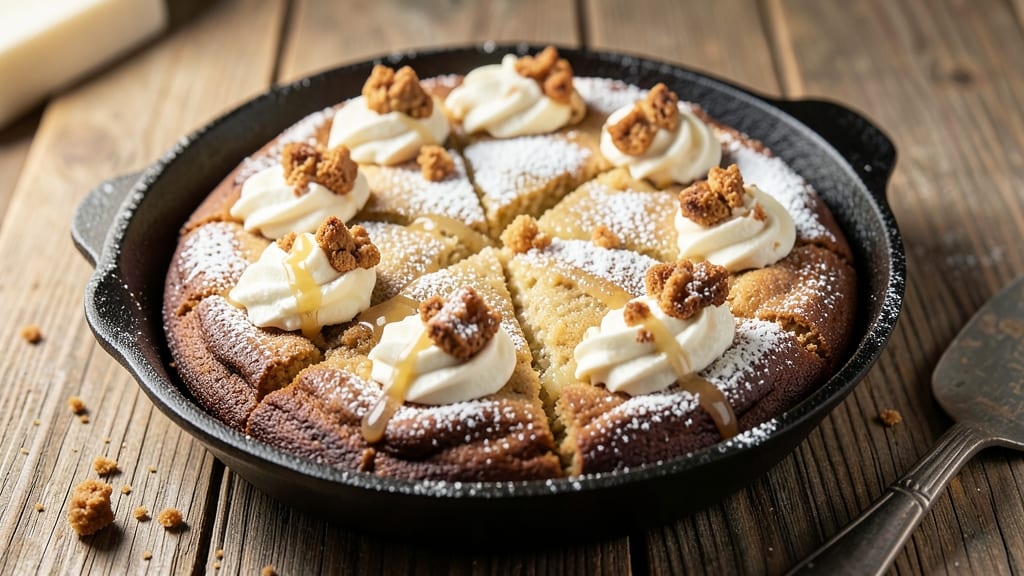
This cast iron cookie cake recipe delivers the perfect balance of buttery crust and caramelized top—every bite is a textural masterpiece. The secret lies in the cast iron pan itself, which creates an unmatched crispy bottom and golden edges that no other pan can match.
I've perfected this technique over years of baking, ensuring your cookie cake turns out with that coveted crackly crust and tender interior.
The beauty of this recipe is its simplicity: just a handful of ingredients combined with precise baking techniques. You'll start with a rich cookie dough base that spreads perfectly in your preheated cast iron skillet, then bake until the edges are golden and the top develops that irresistible caramelized sheen.
The key is patience—letting the cake cool gradually in the pan preserves that perfect texture.
What you'll end up with is a cookie cake that's crispy on the bottom, tender in the middle, and topped with a crackly caramelized crust that's impossible to resist.
It's perfect for special occasions or when you want to impress with a dessert that looks and tastes like it came from a bakery. The cast iron pan ensures even heat distribution, eliminating the risk of cracks or uneven baking.
Serve it warm with a scoop of vanilla ice cream or dusted with powdered sugar for an elegant finish. This recipe is foolproof, provided you follow the cast iron care tips—preheating the pan thoroughly and greasing it lightly to prevent sticking. Let's get started on creating your perfect cookie cake!
Ingredients for cast iron cookie cake
Just twelve ingredients transform your cast iron into a golden, crackly cookie cake masterpiece.
| Ingredient | Amount | Notes |
|---|---|---|
| All-Purpose Flour 🌾 | 2 cups | Sifted for even texture |
| Unsalted Butter 🧈 | 1 cup | Cold, cubed for flakiness |
| Granulated Sugar 🍚 | 1 ½ cups | Light brown preferred |
| Packed Brown Sugar 🍚 | ½ cup | For caramelized top |
| Large Eggs 🥚 | 2 whole | Room temperature |
| Vanilla Extract 🌿 | 1 tbsp | Pure, high-quality |
| Baking Soda 🧂 | ½ tsp | Freshly opened |
| Salt 🧂 | ½ tsp | Fine sea salt |
| Chopped Walnuts 🥜 | ½ cup | Toasted for extra flavor |
| Powdered Sugar 🍚 | ¼ cup | For dusting finish |
| Vanilla Ice Cream 🍦 | 2 cups | For serving suggestion |
| Cast Iron Skillet 🍳 | 1 whole | 10-inch diameter |
The butter and sugars are your golden ticket here—European-style butter like Plugrá or Land O’Lakes has more fat for that perfect flakiness. Grab the light brown sugar from the bulk bins at Whole Foods or Trader Joe's for that caramelized top. Walnuts? Toast your own—Costco's bulk bin is the best deal. Preheat that cast iron like your life depends on it (450°F for 30 minutes). And for the love of all things crispy, sift that flour—it makes a world of difference in texture.
No light brown sugar? White sugar plus 1 tsp molasses gets you close. Short on walnuts? Pecans or hazelnuts work too—just toast them. Butter too soft? Pop it in the freezer 10 minutes. Vanilla extract? Imitation smells like perfume—splurge on the real stuff. And if you're feeling fancy, swap half the walnuts for chopped chocolate chips (dark chocolate preferred). The cast iron? If yours isn't seasoned, coat it with oil and bake empty for an hour first.
Let that cookie cake cool in the pan—at least 15 minutes—before transferring. The longer it rests, the more that crackly crust sets up. Store leftovers in an airtight container for 3 days, but honestly? It disappears faster than that. Freeze portions for up to 3 months—just thaw at room temp before serving. Pro tip: Reheat slices in the oven at 350°F for 5 minutes to revive that crisp. And that ice cream? Ben & Jerry's Vanilla Bean is my go-to—it's got that perfect swirl.
Why You'll Love This Recipe
- One-Bowl Wonder: I swear by this recipe when I’m too tired to measure three separate ingredients. Just toss the flour, sugars, butter, and eggs into the pan—no mixer, no extra bowls, just a quick stir. The cast iron does all the heavy lifting while you sip your coffee.
- Buttery Crunch Core: That perfect balance of crispy edges and a soft, buttery center? It’s all in the brown sugar and melted butter. The sugars caramelize just enough to give it a subtle chew, while the eggs keep it rich without being greasy. Honestly, it’s the kind of texture that makes you forget you’re eating dessert for breakfast.
- Party in a Pan: Between us, this is my go-to for potlucks, book club gatherings, or even a lazy Sunday with friends. Slice it like a cake, serve it warm with ice cream, or let it cool and pack it for lunches. It’s the kind of dish that feels fancy but doesn’t require a fancy occasion.
- Budget-Friendly Magic: Flour, sugar, butter, eggs—these are pantry staples that won’t break the bank. And the best part? The leftovers actually taste better the next day, especially if you reheat them in the same cast iron. I’ve fed a crowd of six for under $10, and no one ever complains.
Step-by-step instructions for cast iron cookie cake
Here's how to bake that perfect cookie cake with a buttery crust and caramelized top.
Prepare the Cast Iron Skillet
Preheat your oven to 350°F and place the 10-inch cast iron skillet inside to heat while the oven preheats. This step ensures the skillet is piping hot when you add the batter, which helps create that signature crispy crust we're after. While it heats, lightly grease the skillet with a small amount of the unsalted butter, using a paper towel to spread it evenly along the sides and bottom. The butter will melt and create a non-stick barrier while adding rich flavor to the crust.
I like to use about 1 tablespoon of the 1 cup unsalted butter for this step—just enough to coat without making the batter too greasy. The remaining butter will be used in the dough for that classic cookie texture. Once the skillet is hot and greased, remove it from the oven and set it aside on a heat-resistant surface.
Create the Cookie Dough
In a large mixing bowl, combine the 2 cups all-purpose flour, 0.5 teaspoon baking soda, and 0.5 teaspoon salt. Whisk these dry ingredients together until fully incorporated—you should see no more flour streaks. In a separate bowl, cream together the 1 cup cold unsalted butter, 1.5 cups granulated sugar, and 0.5 cup packed brown sugar using an electric mixer on medium speed for 3-4 minutes until light and fluffy.
This creaming process is crucial—it incorporates air into the butter and sugar mixture, which will give your cookie cake that perfect rise and tender crumb. You'll know it's ready when the mixture nearly doubles in volume and looks pale and airy. Add the 2 whole large eggs, one at a time, mixing well after each addition. Then stir in the 1 tablespoon vanilla extract and mix until fully combined. Finally, gradually add the dry ingredients to the wet mixture, mixing just until combined. Fold in the 0.5 cup chopped walnuts by hand to distribute them evenly throughout the dough.
Bake the Cookie Cake
Carefully pour the prepared dough into the preheated cast iron skillet, spreading it evenly to the edges. Return the skillet to the oven and bake for 25-30 minutes, or until the edges are golden brown and the top is caramelized. Here's the thing—don't overbake! The cake will continue cooking slightly as it cools, and you want that center to remain soft and gooey. You'll know it's done when a toothpick inserted into the center comes out with a few moist crumbs but no wet batter.
About 5 minutes before the cake is done baking, sprinkle the 0.25 cup powdered sugar evenly over the top. This creates that beautiful dusting of sugar that caramelizes beautifully in the oven's residual heat. When the cake is fully baked, remove it from the oven and let it cool in the skillet for 10 minutes. This resting period helps the cake set and makes it easier to remove from the skillet without breaking.
Serve with Ice Cream
Once the cake has cooled for 10 minutes, carefully invert it onto a serving plate. The cake should release easily from the skillet if it's been properly greased and cooled. If it sticks, run a thin metal spatula around the edges to help loosen it. Serve the warm cookie cake immediately with 2 cups vanilla ice cream on the side. The contrast of the warm cookie cake with the cold ice cream is what makes this dessert truly special.
I like to serve this cookie cake straight from the cast iron skillet, using the skillet as a serving platter for that rustic, old-fashioned charm. The edges will be crispy and buttery, while the center remains soft and chewy—just like a giant cookie. Enjoy each bite with a scoop of ice cream melting on top for the ultimate dessert experience!
Pro Tips For Making Cast Iron Cookie Cake
- Preheat Cast Iron First: Skip the "just throw it in" approach—get that skillet screaming hot for 5 minutes before adding batter. I learned this the hard way when my first attempt stuck like glue. A hot pan creates that signature crispy bottom while the edges rise properly.
- Use Cold Butter for Flavor: Cut that unsalted butter straight from the fridge into the dry ingredients—no softening needed. Cold butter creates pockets of richness that melt into gooey pockets, while room-temperature butter just blends in. (Yes, even if you're impatient like me.)
- Don’t Overmix the Batter: Stir the wet and dry ingredients just until combined—lumpy is fine, tough is not. Overmixing develops gluten, which turns your cookie cake into a dense brick instead of a tender, cakey treat. Stop when the flour is mostly gone, not when it’s smooth.
- Check for Doneness Early: The edges will look golden, but the center might still be raw—tap the cake gently. If it springs back, give it 5 more minutes. I used to pull mine too soon, only to find it gummy inside. A toothpick test works too, but the tap method is faster once you get the rhythm.
Dietary considerations for these flavors
Gluten-Free Adaptation
Swap the 2 cups all-purpose flour for a 1:1 gluten-free flour blend like Bob's Red Mill or King Arthur. These blends mimic all-purpose flour's texture when combined with 1 teaspoon xanthan gum—critical for maintaining that signature crispy crust.
For best results, use 1 cup gluten-free flour blend + 1 cup almond flour (toasted for extra flavor) to improve moisture retention. Chill the dough for 30 minutes before baking to prevent spreading. 🌾
Vegan Version
Replace the 1 cup unsalted butter with 1 cup vegan butter (like Miyoko's or Earth Balance) and use 2 flax eggs (2 tbsp ground flaxseed + 6 tbsp water, mixed and rested for 5 minutes).
For the caramelized top, add 1 tbsp maple syrup to the powdered sugar before sprinkling. The texture will be slightly denser but still delicious. Store-bought vegan vanilla extract works fine—just avoid imitation flavors.
Lower Sugar Options
Reduce the 1.5 cups granulated sugar and 0.5 cup brown sugar to 1 cup total (split evenly between white and brown). Add 0.25 cup unsweetened applesauce to the dough for moisture and natural sweetness.
For the caramelized top, use 0.25 cup monk fruit sweetener (like Lakanto) mixed with powdered sugar—it caramelizes beautifully without adding calories. The cake will be less sweet but still rich and satisfying.
Nut-Free Variation
Omit the 0.5 cup chopped walnuts and replace with 0.5 cup dried cranberries (chopped) or 0.5 cup chocolate chips (dark or dairy-free). For extra texture, fold in 0.25 cup toasted coconut flakes (unsweetened) after baking.
This keeps the cake moist while adding natural sweetness and crunch. If using chocolate chips, add them to the dough in the final mixing step.
Diabetic-Friendly Adjustments
Use 1 cup almond flour instead of all-purpose flour and 0.5 cup coconut sugar (lower glycemic index than white sugar). Replace the 0.25 cup powdered sugar topping with 1 tbsp cinnamon + 1 tbsp chopped pecans for flavor without spiking blood sugar.
The cake will be denser but packed with fiber and healthy fats. Serve with unsweetened whipped coconut cream instead of vanilla ice cream for a lighter option.
Nutrition facts
Frequently asked questions
Why does my cast iron cookie cake crack or sink in the middle?
The most common causes are overmixing the dough or opening the oven too early. Mix just until combined—overworking develops gluten that makes the cake dense. Also, check doneness at 25 minutes—the center should jiggle slightly like Jell-O. If it sinks, it likely overbaked; next time remove it when edges are golden but center still looks soft.
Can I make this recipe without walnuts?
Swap the 0.5 cup walnuts for 0.5 cup chocolate chips (dark preferred) or 0.5 cup dried cranberries (chopped). For nut-free texture, try 0.25 cup toasted coconut flakes after baking. Just fold in your substitute at the very end to maintain even distribution in the dough.
How do I prevent the cake from sticking to the cast iron?
Preheat the skillet for 30 minutes at 350°F first—this creates the perfect non-stick surface. Then use 1 tablespoon melted butter (not oil) to grease it thoroughly, including the sides. The butter's fat content helps release the cake better than oil. Also, let the cake cool 10 minutes in the pan before inverting.
What's the best way to reheat leftover cookie cake?
For crispy edges, wrap slices in foil and warm at 350°F for 5-7 minutes. To revive the caramelized top, place slices on a baking sheet and broil for 1-2 minutes (watch closely!). Microwaving works in a pinch (20 seconds), but it softens the crust. Store leftovers in an airtight container for 3 days at room temperature.
Can I use a different pan size?
This recipe is designed for a 10-inch cast iron skillet, but you can adapt: Use an 8-inch pan and reduce baking time by 5-7 minutes (edges will bake faster). For a 12-inch pan, increase dough by 25% and bake 30-35 minutes. The key is maintaining a 1-inch thick cake for even baking—adjust dough quantity accordingly.