
Desserts
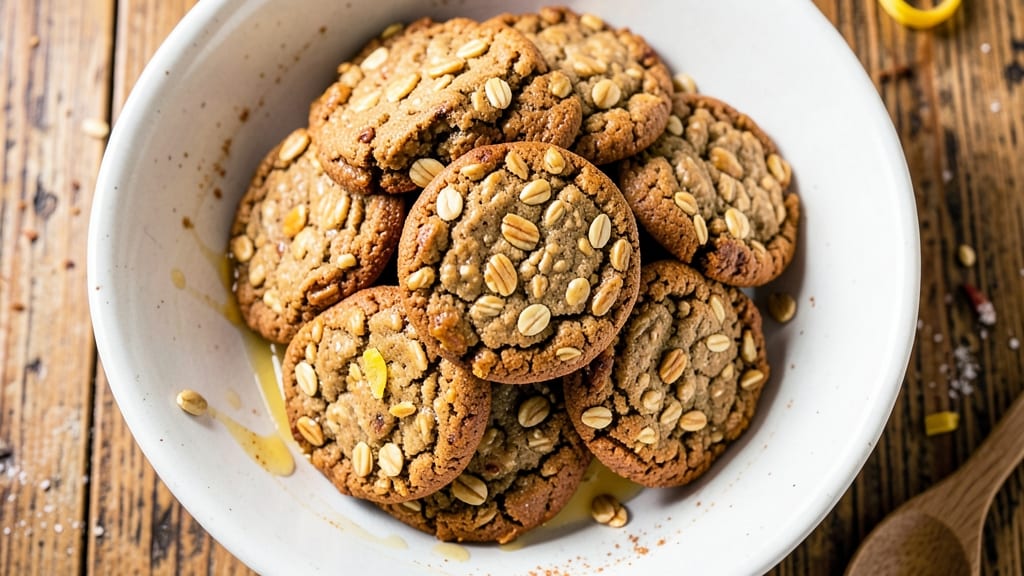
This chewy oatmeal cookie recipe using Quaker oats delivers the perfect balance of warm spiced crunch and gooey centers—every bite is a cozy hug in cookie form. The secret lies in the right mix of brown sugar, butter, and old-fashioned oats that create that signature texture we all love.
I've perfected this recipe over years of baking, ensuring the edges stay crisp while the middle remains soft and chewy.
What sets these cookies apart is the use of Quaker oats for that hearty, slightly nutty flavor and satisfying bite. The recipe calls for simple pantry staples—flour, butter, sugar, and spices—but the technique is what transforms them into restaurant-quality treats.
Brown sugar adds moisture and caramel notes, while cinnamon and nutmeg bring warmth that lingers in every bite.
By the time these cookies emerge from the oven, you'll have golden edges with a crisp texture that gives way to a soft, chewy interior. The aroma alone—warm cinnamon, vanilla, and toasted oats—will fill your kitchen and make your home smell like a bakery.
These cookies stay fresh for days, making them perfect for holiday gifting or satisfying cravings all week long.
The best part? This recipe is foolproof—no fancy equipment needed, just a bowl, a spoon, and a little patience. Whether you stick to the classic version or add chocolate chips, nuts, or dried fruit, the result is always a crowd-pleaser. Let's get baking!
Ingredients for chewy oatmeal cookie recipe quaker
These simple pantry staples create the perfect chewy oatmeal cookies with crisp edges and gooey centers.
| Ingredient | Amount | Notes |
|---|---|---|
| Quaker Old-Fashioned Rolled Oats 🌾 | 2 cups | Uncooked, not instant |
| Unsalted Butter 🧈 | 1 cup | Cold, cubed for easier mixing |
| Light Brown Sugar 🍚 | 1 cup | Packed tightly for moisture |
| Granulated Sugar 🍚 | ½ cup | For crisp edges |
| Large Eggs 🥚 | 2 whole | Room temperature preferred |
| Pure Vanilla Extract 🍯 | 2 tsp | Imitation won't do |
| All-Purpose Flour 🌾 | 2 cups | Sifted for light texture |
| Ground Cinnamon 🌿 | 1 ½ tsp | Freshly ground for warmth |
| Ground Nutmeg 🌿 | ½ tsp | Freshly grated preferred |
| Salt 🧂 | 1 tsp | Diamond Crystal preferred |
| Baking Soda 🧪 | 1 tsp | Not baking powder |
| Chocolate Chips 🍫 | 2 cups | Semi-sweet preferred |
| Large Granulated Sugar 🍚 | ½ cup | For sprinkling on top |
The Quaker oats are the star here—Old-Fashioned Rolled gives that satisfying bite we all love. Trader Joe's and Costco sell them in bulk for the best price, but any grocery store carries them. The butter should be cold when you start mixing—this keeps the cookies from spreading too much. Plugrá or Land O'Lakes unsalted work perfectly. Brown sugar is non-negotiable for that caramel depth, but if you're in a pinch, dark molasses can add a similar richness. The vanilla extract? Nothing fake here—imitation won't give you that warm, authentic flavor.
No chocolate chips? Dried cranberries or chopped nuts add texture and a nice contrast. Short on butter? Coconut oil works in a bind, but it'll give a slightly different flavor. The baking soda is crucial—don't swap it for powder. If you're making these ahead, underbake slightly (they firm up as they cool) and store in an airtight container. The cinnamon and nutmeg should be freshly ground if possible, but pre-ground is fine for everyday baking. Penzeys spices are my go-to for that extra punch, but the regular grocery store brands work too.
These cookies stay fresh for 5-6 days in an airtight container at room temperature, but honestly, they taste even better the next day once everything has settled. For gifting, wrap individual cookies in parchment and tie with twine. They freeze beautifully too—just 2 months max—so bake a double batch when you have time. The secret to that perfect chewy texture? Don't overbake. Pull them when the edges are golden but the centers still look soft.
Why You'll Love This Recipe
- No Mixer Needed: I swear by this dough—just creaming butter and sugars, folding in oats. No electric mixer, no fuss, and the texture comes out perfectly chewy every time.
- Brown Sugar Magic: That light brown sugar? It’s the secret—caramelizing just enough to give these cookies a deep, buttery richness. Honestly, I’ll take these over store-bought any day.
- Bulk-Friendly Batches: Double the recipe, freeze half, and you’ve got a stash for holidays, coffee breaks, or when you’re too tired to bake. (Yes, even on a Tuesday night.)
- Pantry Staple Power: You’re using things you already have: oats, butter, sugar, eggs. No weird substitutions, no last-minute grocery runs. This is my go-to when I’m broke or lazy—both work.
Step-by-step instructions for chewy oatmeal cookies
Here's how to make these irresistibly chewy oatmeal cookies with perfect texture every time.
Cream Butter and Sugars Together
In a large mixing bowl, combine the 1 cup unsalted butter (cold and cubed) with the 1 cup light brown sugar and 0.5 cup granulated sugar. Using a hand mixer or stand mixer on medium speed, beat everything together for 3-4 minutes until light and fluffy. You'll know it's ready when the mixture nearly doubles in volume and looks pale and airy.
This creaming process is crucial—it incorporates air that creates those signature chewy pockets in the cookies. I press down on the butter mixture occasionally with a spatula to make sure it's fully emulsified. If you're using room-temperature butter, it'll take slightly longer to reach this stage, so be patient.
Add Eggs and Vanilla
Add the 2 whole large eggs one at a time, mixing well after each addition. Then stir in the 2 teaspoons pure vanilla extract. The mixture will look slightly curdled at first, but don't worry—this is normal. The vanilla adds that warm, comforting flavor that makes these cookies so special.
I like to give the mixture a quick scrape down with a spatula at this point to make sure all the ingredients are fully incorporated. This is also a good time to taste the mixture—it should be sweet and buttery with a hint of vanilla. If you're feeling adventurous, you could even add a pinch of salt here to taste, but we'll be adding the full amount later.
Mix in Dry Ingredients
In a separate bowl, whisk together the 2 cups all-purpose flour, 1.5 teaspoons ground cinnamon, 0.5 teaspoon ground nutmeg, 1 teaspoon salt, and 1 teaspoon baking soda. Then gradually add this dry mixture to the wet ingredients, mixing on low speed just until combined. Be careful not to overmix—you should still see some flour streaks in the mixture.
Next, fold in the 2 cups chocolate chips by hand using a wooden spoon or silicone spatula. Make sure they're evenly distributed throughout the dough. I like to press the chocolate chips into the dough slightly so they'll melt perfectly in the oven. The nutmeg adds a warm, cozy depth that pairs beautifully with the cinnamon and chocolate.
Chill the Dough
Cover the mixing bowl with plastic wrap and refrigerate the dough for at least 1 hour, or up to 24 hours if you have time. This chilling step is absolutely essential—it prevents the cookies from spreading too much in the oven and helps develop that perfect chewy texture. The cold dough also makes it easier to handle and portion.
While the dough chills, preheat your oven to 350°F and line two baking sheets with parchment paper. I like to use the extra time to measure out the 0.5 cup large granulated sugar for the tops of the cookies. This step is what gives these cookies their signature crisp edges and caramelized tops.
Bake to Golden Perfection
Scoop the chilled dough into 2-tablespoon portions (about 1.5 ounces each) and roll them into balls. Place them 3 inches apart on the prepared baking sheets. Sprinkle each ball with a pinch of the 0.5 cup granulated sugar on top—this creates that beautiful caramelized crust.
Bake in the preheated oven for 12-14 minutes, rotating the pans halfway through for even baking. The cookies are done when the edges are golden brown and the tops look slightly underbaked in the center. They'll continue cooking as they cool on the baking sheet. Let them cool on the pans for 5 minutes before transferring to a wire rack to cool completely.
Pro Tips For Making Chewy Oatmeal Cookie Recipe Quaker
- TOAST THE OATS FIRST: I learned this the hard way—skipping the toasting step means your cookies will taste raw, not chewy. Spread the rolled oats on a baking sheet at 350°F for 8–10 minutes, stirring halfway, until they’re golden and smell nutty. This adds depth and prevents a chalky texture later.
- CREAM THE BUTTER COLD: Don’t let the butter get soft before mixing—it’s the difference between tender cookies and greasy dough. Use ice-cold butter straight from the fridge, and cut it into small cubes. The dough will hold its shape better, and the cookies won’t spread too much.
- UNDERMIX THE EGG: The egg’s job is to bind, not to overwork the dough. Crack it into a separate bowl first, then mix it in just until combined—no need to beat it in like cake batter. Overmixing = tough cookies, and nobody wants that.
- BAKE TWO MINUTES LONGER: Oatmeal cookies look done at 18–20 minutes, but they keep cooking on the sheet. Pull them when the edges are just set and the centers still look slightly underbaked. They’ll firm up as they cool—this guarantees chewy perfection, not dryness.
Regional styles of this dish
New England Spiced Classic
In New England, these oatmeal cookies get a cozy twist with extra nutmeg and a touch of cardamom—about ½ teaspoon of each—to complement the maple syrup flavor that’s popular in the region.
I like to replace ½ cup of the chocolate chips with dried cranberries (about ½ cup) for a tart contrast that’s perfect with morning coffee. The 350°F bake time stays the same, but I extend it to 14-16 minutes for a deeper caramelization on top. 🌾
Southern Buttery Crunch
Southern bakers take these cookies to heart by adding ½ cup of pecans (chopped) and a pinch of sea salt (about ¼ teaspoon) to the dough for a buttery, briny depth.
The brown sugar is packed even tighter here, and I recommend using 3 tablespoons of molasses instead of some of the vanilla for a molasses cookie vibe. Bake at 325°F for 16-18 minutes to let the flavors meld together. 🧈
Midwest Molasses Twist
The Midwest loves a molasses kick, so swap out 2 tablespoons of the vanilla extract for 2 tablespoons of molasses and add 1 teaspoon of ginger to the spice mix. The dough benefits from an extra 30 minutes of chilling to let the molasses soften the texture.
Bake at 350°F for 12-14 minutes, but watch closely—the molasses can make the edges brown faster. A sprinkle of coarse sea salt after baking enhances the caramelized tops. 🍯
Pacific Northwest Dark Chocolate
Out West, dark chocolate reigns supreme. Replace the semi-sweet chocolate chips with 2 cups of dark chocolate chunks (60-70% cacao) and add ½ teaspoon of espresso powder to the dry ingredients for a mocha-inspired depth.
The brown sugar is packed firmly, and I reduce the granulated sugar to ¼ cup to balance the richness. Bake at 350°F for 13-15 minutes—the higher cacao content means they’ll hold their shape better. 🍫
Texas-Style Cinnamon Pecan
Texans love their cinnamon and pecans, so double the cinnamon to 3 teaspoons and add 1 cup of pecan halves to the dough. The brown sugar is packed tightly, and I like to add 1 tablespoon of bourbon (like Maker’s Mark) to the vanilla for a smoky depth.
Bake at 350°F for 14-16 minutes, but press the pecan halves into the tops of the cookies before baking for extra crunch. 🥜
Nutrition facts
Frequently asked questions
Why do these cookies need to chill before baking?
The 1-hour chill is key for perfect texture—it prevents excessive spreading and helps develop that signature chewy center. Cold dough also makes rolling easier and ensures the cookies hold their shape in the oven.
Can I substitute quick oats for Quaker Old-Fashioned oats?
No, quick oats won't give the same satisfying bite. Old-Fashioned rolled oats provide that hearty texture and nutty flavor. If you're in a pinch, toast regular oats in a dry pan for 3-4 minutes first to mimic the texture slightly.
How do I tell when the cookies are done baking?
Look for golden edges and slightly underbaked centers—they'll firm up as they cool. The tops should look set but still soft. A toothpick inserted should come out with a few moist crumbs, not wet batter. 12-14 minutes at 350°F is perfect.
What if my cookies spread too much?
This usually means the butter wasn't cold enough or the dough wasn't chilled. Next time, use cold butter cubes and chill the dough 2 hours instead of 1. Scoop portions slightly smaller (1.5 ounces) and space them 3 inches apart on the baking sheet.
Can I make these cookies gluten-free?
Yes, but texture will differ. Replace the 2 cups all-purpose flour with a 1:1 gluten-free blend (like Bob's Red Mill) plus ½ teaspoon xanthan gum. Add 1 tablespoon extra milk to the dough to compensate for dryness. Expect slightly denser cookies.